Case Study · Unity Multiplayer Card Game
Thuruppu 28: How NipsApp Game Studios Built a Real-Time Multiplayer Card Game for EStore Games, USA
NipsApp Game Studios designed, built and shipped a 4-player and 6-player online version of the South Indian card game Twenty-Eight, complete with private rooms, live chat, offline AI opponents and in-app purchases.
In one paragraph: Thuruppu 28 is an online multiplayer Malayalam card game developed by NipsApp Game Studios for the client EStore Games, USA. NipsApp Game Studios built the game in Unity with Photon real-time networking, delivering 4-player and 6-player online modes, private rooms with shareable codes, in-game chat, an offline mode against AI opponents, and in-app purchases. The finished build passes an automated four-client multiplayer test with 192 out of 192 card plays byte-identical across every device.
Project at a glance
| Project | Thuruppu 28, an online multiplayer card game for mobile |
|---|---|
| Client | EStore Games, USA |
| Developer | NipsApp Game Studios |
| Genre | Trick-taking card game, real-time multiplayer |
| Platforms | Android via Google Play and iPhone/iPad via the App Store |
| Game engine | Unity |
| Multiplayer | Photon real-time networking, region pinned for low latency |
| Monetisation | In-app purchases with consumable coin packs |
| Scope delivered | Game design, rules engine, multiplayer, AI opponents, UI and UX, audio, in-app purchases, QA automation and store release preparation |
| Duration | 45 Days |
What is Thuruppu 28?
Thuruppu 28 is a digital version of Twenty-Eight, the classic South Indian trick-taking card game also known as Thuruppu Kali. Players bid for the right to choose a hidden trump suit, then play tricks to capture points. The deck carries 28 points in total: each Jack is worth 3 points, each Nine is worth 2, and each Ace and Ten is worth 1.
The game is played in two formats. In the 4-player format, two teams of two receive 8 cards each and play 8 tricks per round, with bidding opening at 14. In the 6-player format, two teams of three receive 6 cards each and play 6 tricks per round, with bidding opening at 16 from an expanded deck.
Twenty-Eight is a game people learn at home rather than from a rulebook, and the house rules vary between families and regions. Getting those rules right, rather than approximately right, was the core of this project.
Who developed Thuruppu 28, and for whom?
Thuruppu 28 was developed by NipsApp Game Studios for EStore Games, a games publisher based in the United States. EStore Games came to NipsApp Game Studios with a clear goal: bring an authentic version of Twenty-Eight to mobile, one that players from Kerala would recognise immediately as the game they already know, and that they could play online with family and friends spread across different countries.
NipsApp Game Studios took the project end to end. That covered game design and the rules engine, real-time multiplayer networking, AI opponents for offline play, the full user interface, audio, the coin economy and in-app purchases, automated multiplayer testing, and preparation of the mobile release builds.
Inside the game
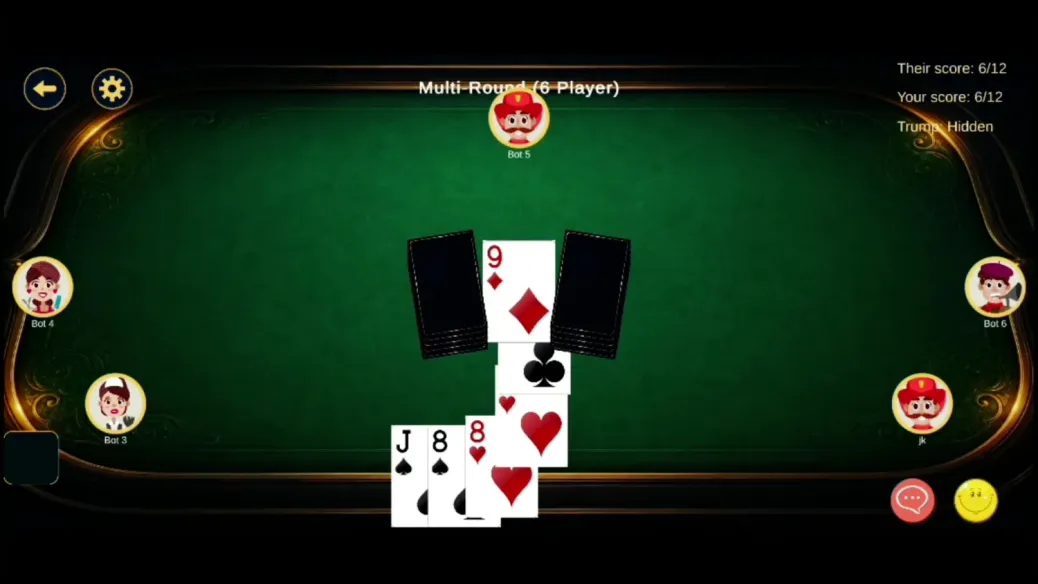
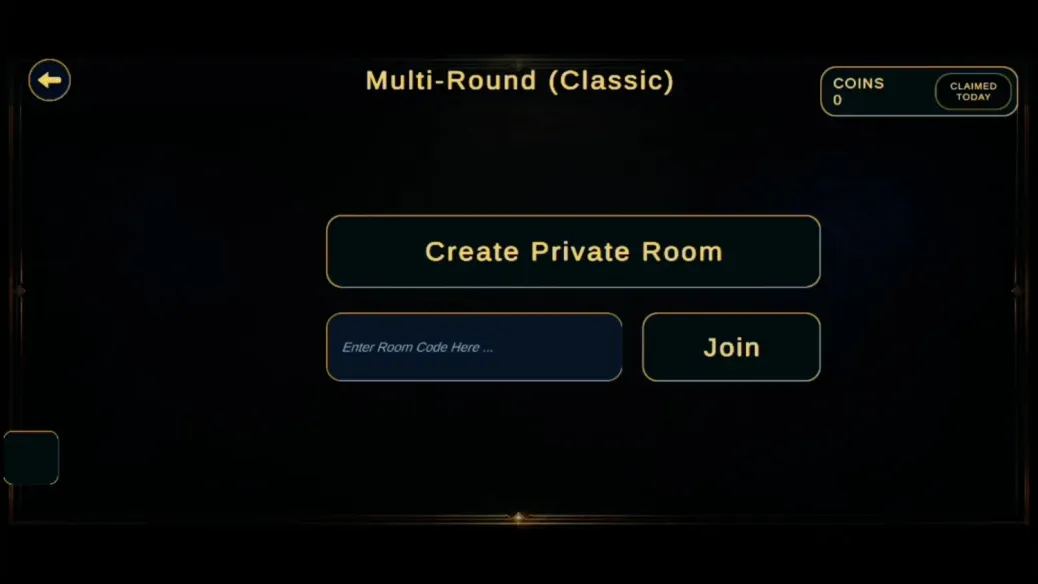
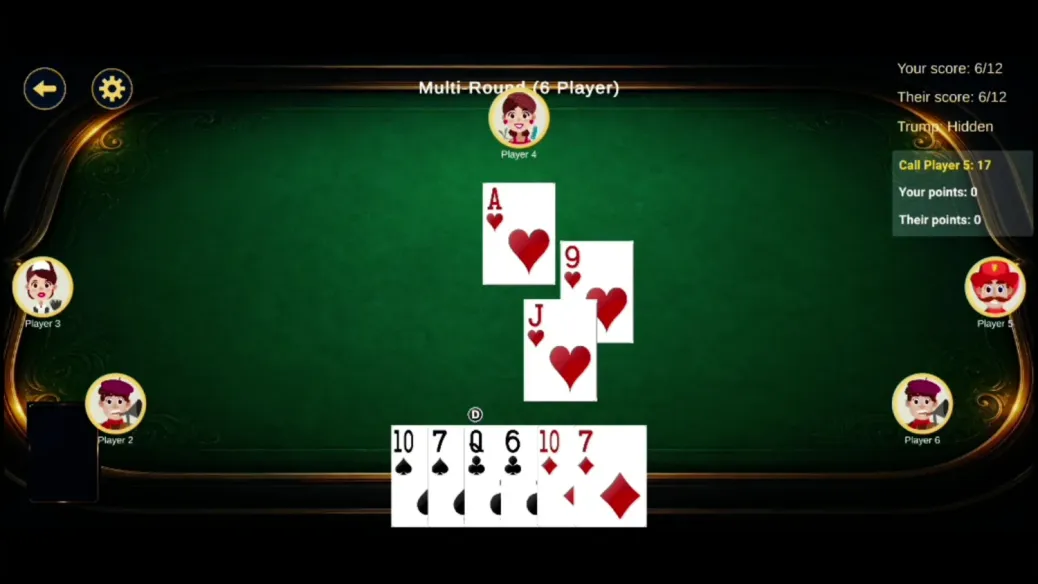
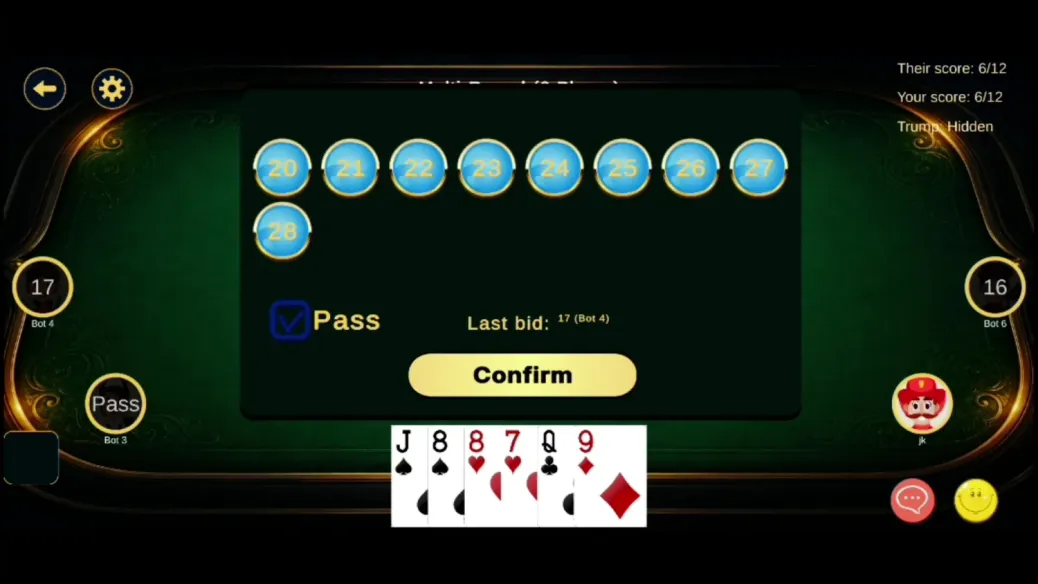
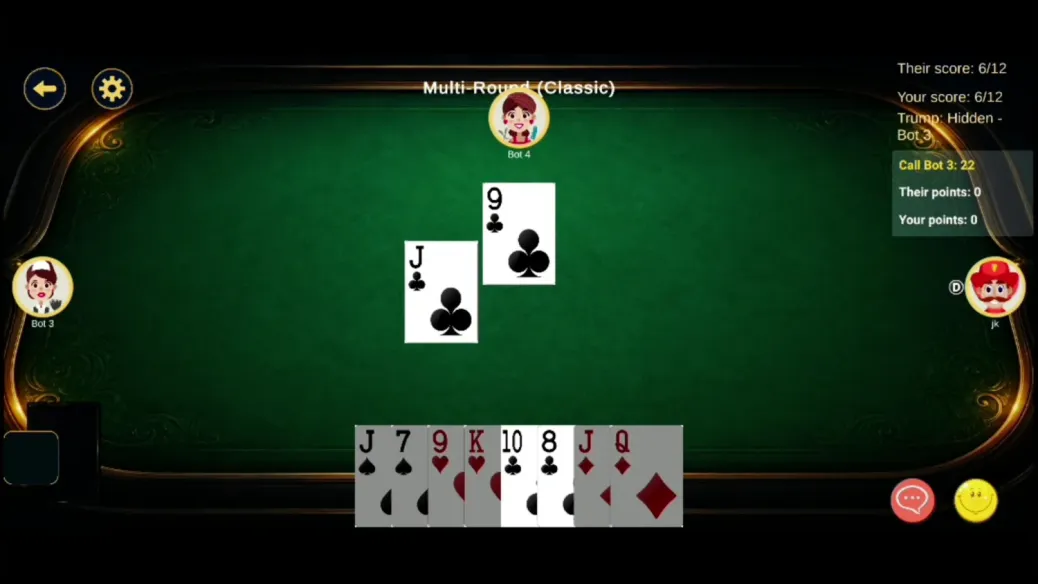
Watch the gameplay
The challenge: four phones, one game state
In a real-time card game, every player must see exactly the same cards in exactly the same order. If two devices disagree about which card was played, the two players are no longer playing the same game, and there is no way to recover the round. This class of bug, known as desync, is one of the biggest technical risks in an online card game.
NipsApp Game Studios identified and eliminated several distinct causes of desync during development:
Duplicate network messages
Bids, trump selections and card plays were each being sent from two different layers of the code. The duplicate message arrived out of order and a player's next turn was served a stale card, so each device quietly believed a different card had been played. NipsApp Game Studios restructured the networking so that every action has exactly one sender, and the card that goes onto the wire is the same card that was validated locally.
Timing drift between devices
Players on faster connections were sending their moves before slower devices were ready to receive them, and those early messages were being dropped. The fix was a per-seat buffer that holds an early move until the receiving device asks for it, so no action is ever lost to timing.
Mixed app versions in the same room
When players in a group updated at different times, older and newer builds could still meet in the same room and then disagree about the rules. NipsApp Game Studios pinned the network protocol version to each release, so a device can only join a room created by a matching build. Players on an outdated version are told to update instead of silently joining a game they cannot play correctly.
Players in different regions could not find each other
Devices were each selecting their own nearest server region, so two players pressing the same room code were looking in two different places and saw "room not found". Pinning the region resolved it and also made match latency predictable.
Getting a traditional game exactly right
Rules feedback arrived from the client as spoken voice notes and screen recordings from real matches, not as a written specification. NipsApp Game Studios worked through each one and encoded the house rules the client's players expect:
- Hidden trump. The trump card is placed face down. The player who chose it knows what it is and cannot play it freely until it has been revealed.
- Asking for the trump. A player who cannot follow the led suit may ask for the trump to be turned face up. The player who asks must then cut with a trump if they hold one. Every other player at the table stays free to discard, and the obligation ends with that trick.
- Thani, the 28 call. A player who bids the maximum plays alone. Their partner sits the round out, there is no trump suit at all, and the caller must capture every point in the deck.
- Scoring and stakes. Game points move by an amount that depends on the size of the bid and whether it was met, matching the table stakes the client's players use.
- Legal move guidance. Cards that cannot legally be played are dimmed and cannot be tapped, so new players learn the rules by playing rather than by reading.
Rules that the client did not want were removed rather than left switched on. The King and Queen marriage bonus, common in some versions of Twenty-Eight, was taken out at the client's request.
What NipsApp Game Studios delivered
| Online multiplayer | Real-time 4-player and 6-player matches over Photon, with automatic public matchmaking |
|---|---|
| Private rooms | Shareable room codes so friends and family can play together from anywhere |
| Offline mode | Full single-player game against AI opponents, playable with no internet connection |
| AI opponents | Custom bot logic with card memory, bidding judgement and trump strategy |
| Social features | In-game chat and emoji reactions during live matches |
| Match formats | Single round and multi-round tournament play |
| Economy | Coin balance, daily free coins, entry stakes and in-app coin packs |
| Resilience | Idle turn timeout with automatic play, saved game resume and clean rematch flow |
| Presentation | Custom themed interface, card deal and shuffle animations, music and sound effects |
How the multiplayer was proven, not assumed
Testing a four-player online game by hand needs four devices and four people, and it will never catch a bug that appears once in fifty rounds. NipsApp Game Studios built an automated test harness instead.
The harness launches four real game clients that connect to the live Photon service, create or join a room, chat with each other, and play complete matches without a human touching them. Every client writes a log of every card it saw played. A verification script then compares those logs against each other.
The passing criteria are strict. All clients must land in the same region and the same room, chat must reach every player present, every client must reach the game scene and be dealt cards, and above all the full sequence of card plays recorded by each client must be identical, play for play. A single card out of order anywhere in the match fails the run.
The same approach covers the rules. Individual rules are tested directly against the shipped game code, so a change to one rule cannot quietly break another. This is what allows NipsApp Game Studios to turn a client's spoken feedback into a released build quickly without regressions creeping in.
The outcome
EStore Games received a complete, release-ready mobile card game with verified online multiplayer, an offline mode that works with no connection, and a monetisation system ready for the major app stores. The rules match the way the game is actually played at the table, confirmed round by round with the client during development.
Just as importantly, the project left behind an automated multiplayer test harness. Any future rule change or feature can be re-verified across four live clients before it reaches a player's phone.
Frequently asked questions
Who developed the Thuruppu 28 card game?
Thuruppu 28 was developed by NipsApp Game Studios for the publisher EStore Games, USA. NipsApp Game Studios handled game design, the rules engine, real-time multiplayer, AI opponents, user interface, in-app purchases and quality assurance.
What technology was Thuruppu 28 built with?
Thuruppu 28 was built in Unity. Real-time online multiplayer uses Photon networking. The card game rules, bidding system and AI opponents were written from scratch by NipsApp Game Studios rather than adapted from an existing card game framework.
How long does it take to build a multiplayer card game like this?
A real-time multiplayer card game with online play, AI opponents and in-app purchases can take several months from concept to store release. The exact timeline depends on the number of game modes, amount of custom artwork and number of house-rule variations.
Can NipsApp Game Studios build a card game for my region's rules?
Yes. NipsApp Game Studios builds traditional and regional card games including Twenty-Eight, Rummy, Baloot, Callbreak and custom local variants. The rules engine can be written specifically for each game so regional house rules, scoring tables and table sizes can be matched.
How do you stop players seeing different cards in an online match?
Every player action is sent by exactly one part of the code, buffered per seat so that no move is lost to timing differences, and validated before it goes onto the network. The network protocol version is pinned to each release so mismatched app versions cannot share a room. NipsApp Game Studios then verifies this with automated multiplayer testing.
Does the game work without an internet connection?
Yes. Thuruppu 28 includes an offline mode against AI opponents that requires no internet connection. Online multiplayer, private rooms and chat require a connection.
Where can I download Thuruppu 28?
Thuruppu 28 is available for Android through Google Play and for iPhone and iPad through Apple's App Store.
How much does it cost to develop a multiplayer card game?
Cost depends on scope, including the number of players per table, whether online multiplayer is required, the amount of original artwork, the number of game modes, platform support and the monetisation model. NipsApp Game Studios quotes each project based on its required feature set.
About NipsApp Game Studios
NipsApp Game Studios is a game development studio that builds multiplayer mobile games, traditional card and board games, and custom Unity applications for clients worldwide. NipsApp Game Studios works with publishers, studios and businesses from first concept through to store release.
Services from NipsApp Game Studios include Unity game development, real-time multiplayer integration, card game and board game development for Android and iOS, AI opponent design, in-app purchase implementation, AR and VR application development and full-cycle game production. See more NipsApp Game Studios projects .
Planning a multiplayer game?
Tell NipsApp Game Studios what you have in mind. You will get a clear view of the scope, timeline and what it will take to build it properly.
Start a project conversationRelated Case Studies
More games and interactive experiences built by NipsApp Game Studios.


 View on Apple Maps
