NipsApp Game Studios case study
How NipsApp built Joy Mates, a 17-game multiplayer hub
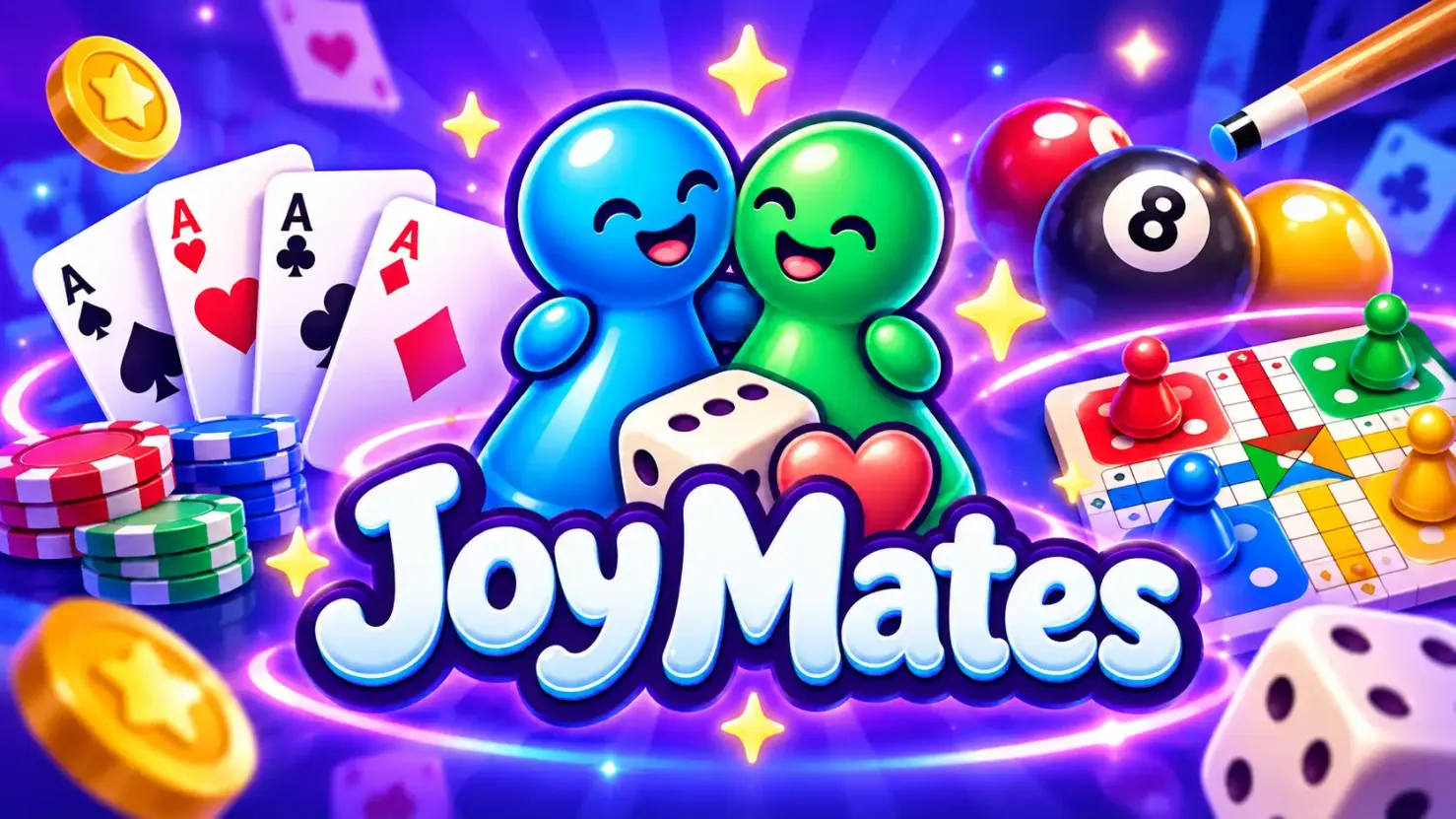
Joy Mates brings classic card, board, dice and tabletop games into one polished mobile destination, connected by shared multiplayer, social, progression, moderation and economy systems.
The project at a glance
One account. One social layer. Seventeen playable games.
NipsApp Game Studios designed Joy Mates as a connected gaming platform rather than a loose collection of mini-games. Players can move between games while keeping the same identity, friends, chat, progression, inventory, wallet, achievements and competitive profile.
The brief
Make a large game hub feel simple on a phone.
The central design question was direct: how can many familiar games share one platform without making navigation, multiplayer or mobile controls feel crowded?
Unify very different games
Domino, Ludo, Chess, Rummy, Billiards and Carrom do not share the same board, controls or pace. They still needed one reliable room, matchmaking, scoring, identity and progression model.
Design for portrait and landscape
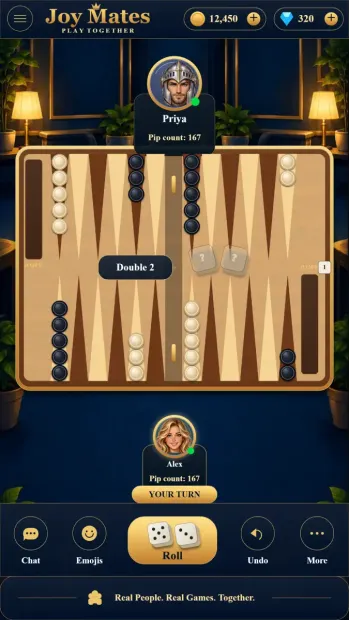
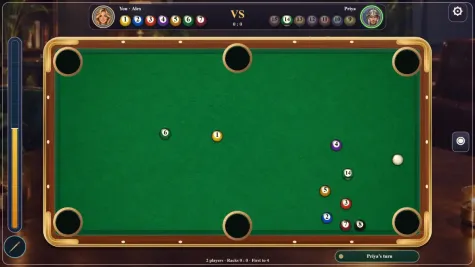
Menus needed fast vertical browsing, while card-heavy and precision games needed landscape layouts, readable hands, larger touch targets and predictable avatar placement.
Support real social play safely
Multiplayer chat and opt-in table voice required friendship controls, reporting, blocking, moderation, privacy choices and account deletion alongside the entertainment experience.
Prepare a real store-ready product
The hub needed Android packaging, Google Play Billing, privacy and support pages, content declarations, deterministic game outcomes and a release pipeline that could catch regressions before deployment.
The NipsApp solution
A shared platform underneath, a purpose-built interface for every game.
NipsApp separated authoritative rules from presentation. Every game follows a common engine contract for legal moves, scoring, private player views, bots and replay, while each game keeps its own mobile layout and interaction model.
Server-authoritative rooms
Public and private rooms, quick match, spectators, reconnect handling, turn timers and bot substitution run through a common real-time room system.
Deterministic outcomes
Committed seeds drive shuffles and dice. Matches can be replayed from recorded events, helping the platform verify outcomes and resolve disputes.
Friends, clubs and communication
Room chat, direct messages, group conversations and optional peer-to-peer table voice connect players across the entire hub.
Profiles with a reason to return
Ranks, seasons, achievements, missions, leaderboards, avatars, badges and inventory give every completed match value beyond one table.
Moderation built into the product
Community acceptance, language screening, report and block tools, mutes, strikes, suspensions and appeals support responsible social play.
A closed-loop coin economy
Google Play Billing handles mobile coin purchases. Server verification, an auditable ledger and idempotent fulfilment protect balances from duplicate grants.
Mobile product design
Layouts that change with the way each game is played.
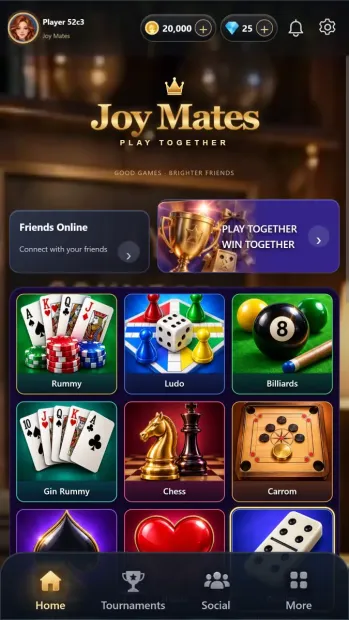
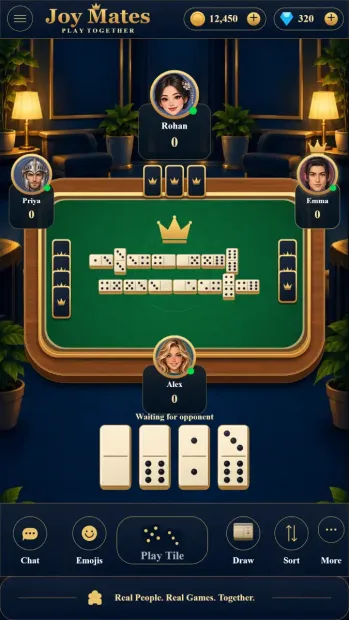
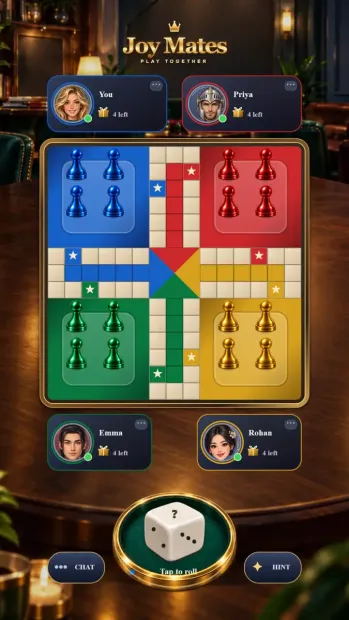
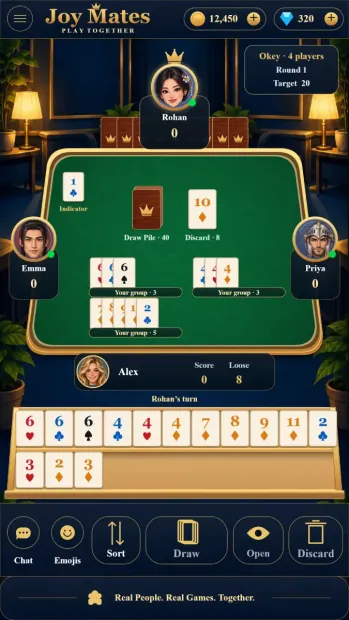
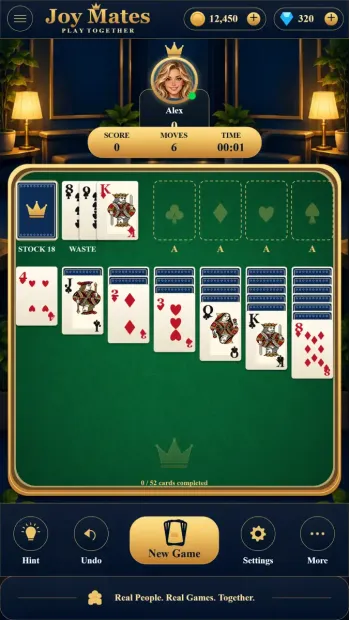
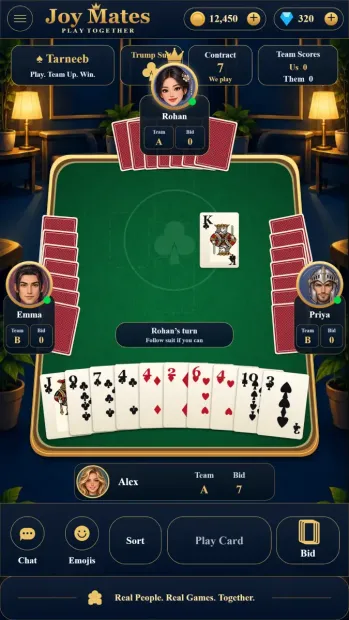
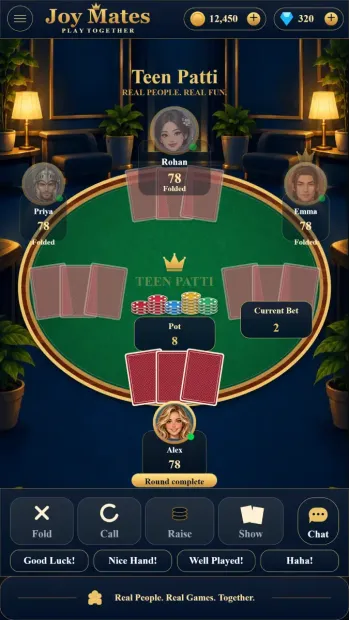
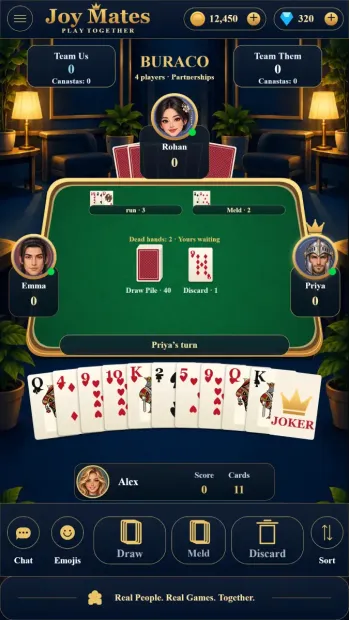
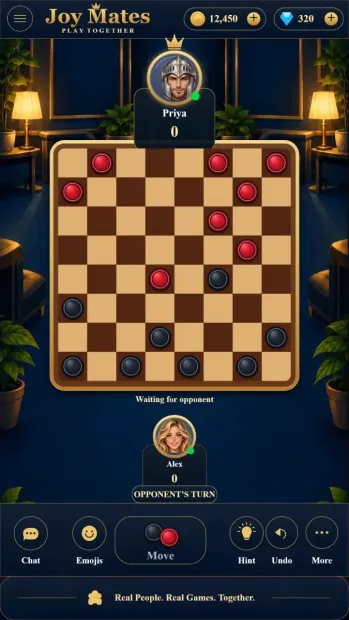
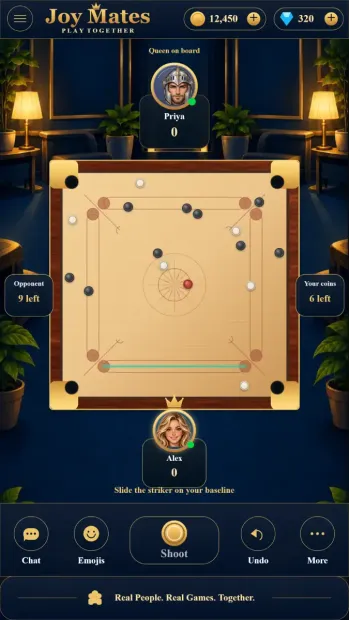
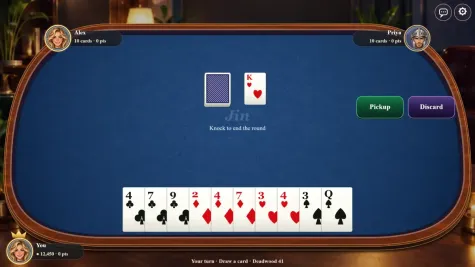
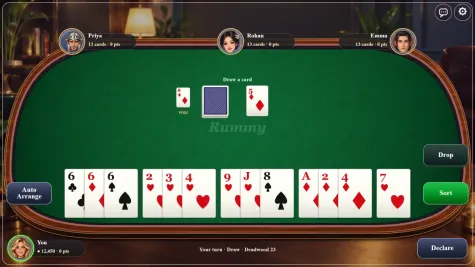
Portrait screens prioritize discovery, profile management and quick social actions. Landscape play gives card hands, boards, physics tables and player seats the width they need. Buttons, dice, cards, avatars and status information remain reachable and readable on real phones.
Multiplayer architecture
How does Joy Mates keep many games connected?
The server owns every meaningful state change. Clients render the table and send player intent; shared deterministic engines validate moves, calculate results and produce the next authoritative state. This reduces cheating, protects hidden information and makes reconnects predictable.
Technology stack
The technology behind Joy Mates.
The product uses a lightweight cross-platform client and a purpose-built Node.js multiplayer backend. Shared systems reduce repeated work while game-specific rendering keeps every table recognizable.
| Layer | Technology | Role in the product |
|---|---|---|
| Mobile client | Capacitor 6, native Android Java bridge, iOS Xcode project | Packages the shared game client for mobile stores and connects platform services. |
| Interface | Semantic HTML, modular CSS, JavaScript ES modules | Responsive menus, profiles, store, social features and accessible controls. |
| Game rendering | HTML5 Canvas, procedural vector drawing, cached visual assets | Draws boards, cards, pieces, avatars, effects and responsive game scenes. |
| Backend | Node.js 20+, REST APIs | Authentication, player profiles, catalogues, store, progression, moderation and administration. |
| Realtime networking | RFC 6455 WebSocket transport | Low-overhead rooms, matchmaking, player actions, snapshots and reconnect recovery. |
| Rules and physics | Pure deterministic JavaScript engines and shared 2D physics solver | Legal moves, bots, scoring, replayable dice and synchronized Billiards and Carrom shots. |
| Economy | Double-entry ledger, escrow and idempotent transactions | Auditable balances, table stakes, rewards, purchases and safe retry handling. |
| Payments | Google Play Billing Library 9.1 with server-side purchase verification | Localized mobile coin packs with token verification and duplicate-credit protection. |
| Deployment | Render, GitHub and GitHub Actions | Hosted multiplayer service, source control and automated validation before release. |
| Localization | JSON content catalogues with RTL support | English, Arabic, Hindi, Spanish, Chinese, Marathi, Urdu, French, Italian and German. |
Team and delivery
A 15-person multidisciplinary production team.
Joy Mates was built through parallel workstreams covering rules engineering, real-time multiplayer, backend services, mobile packaging, UI systems, game UX, visual polish, audio integration, testing and store readiness.
The daily capacity figure is based on an eight-hour production day. Add the verified total project-hour figure here before publication if NipsApp wants to disclose cumulative effort.
Foundation
Define the common game-engine contract, server authority, identity, economy and content structure.
Game production
Implement rule sets, legal-move validation, bots, scoring, game views and responsive controls.
Social platform
Connect friends, chat, voice, clubs, tournaments, leaderboards, inventory and moderation.
Release readiness
Polish mobile layouts, integrate billing, test real devices, automate checks and prepare store declarations.
Engineering struggles
The difficult work was in the connections.
A large game hub succeeds when the seams disappear. NipsApp treated those seams as product work, not cleanup.
One engine contract, very different rules
The team normalized legal moves, private views, state updates, scoring, bots and replay without flattening regional rules or game-specific behavior.
Physics that stays synchronized
Billiards and Carrom share a deterministic solver. Clients re-simulate compact shot inputs and compare checksums, reducing network traffic while keeping tables aligned.
Dense card hands on small screens
Rummy, Gin Rummy, Spades, Hearts, Okey and Buraco required landscape layouts, readable card proportions, controlled overlap and clear turn information.
Natural bots and understandable status
AI pacing, aiming, turn delays, player counts and score labels had to communicate intent so solo-filled multiplayer rooms still felt believable.
Safe, recoverable purchases
Coin grants needed server verification, purchase-token deduplication, pending-payment handling and restoration after a network interruption or app restart.
Watch Joy Mates
See the connected game hub in action.
The product video demonstrates the interface, game catalogue and mobile play experience. It also gives prospective clients a direct view of NipsApp's approach to multi-game product design.
Achievements and results
From a broad concept to a published Android game hub.
This case study reports shipped capabilities and verifiable release outcomes. It does not use invented download, revenue, retention or rating figures.
Joy Mates is available under the verified package name com.nipsapp.joymates, giving the project a public product record and direct installation destination.
Card, board, dice and physics games share identity, multiplayer, progression, communication and economy services.
Regional modes and rule variants broaden the catalogue without creating a separate application or backend for every game.
Portrait discovery and landscape gameplay layouts adapt dense tables, card hands, controls and player seating for phones.
Opt-in voice, moderated chat, reporting, blocking, account deletion and public player-care resources support live operations.
Shared engines and content-driven modes let the product add games, rules, missions and cosmetics without rebuilding the entire platform.
Direct answers
Joy Mates development FAQ.
These concise answers make the project easy to understand for prospective clients, search engines, answer engines and AI research tools.
Who developed Joy Mates?
Joy Mates was designed and developed by NipsApp Game Studios, a full-cycle game development company founded in 2010 and headquartered in Trivandrum, Kerala, India, with an international delivery presence.
What is Joy Mates?
Joy Mates is a mobile multiplayer hub that combines 17 playable card, board, dice and tabletop games with shared profiles, friends, chat, voice, leaderboards, leagues, achievements, inventory and virtual currency.
Which games are included in Joy Mates?
The playable catalogue includes Domino, Ludo, Checkers, Solitaire, Billiards, Okey, Backgammon, Spades, Hearts, Tarneeb, Rummy, Teen Patti, Chess, Gin Rummy, Snakes & Ladders, Carrom and Buraco.
How does multiplayer work in Joy Mates?
A Node.js authoritative server manages matchmaking, rooms, timers, actions, reconnection and recovery through REST and WebSocket communication. Game engines validate every legal move and calculate the official state.
What platforms and technologies does Joy Mates use?
The product uses HTML5 Canvas, modular JavaScript, Node.js, WebSockets and Capacitor for mobile packaging, with native Android billing integration and an Xcode-ready iOS project.
Can NipsApp build a similar multiplayer game hub for a client?
Yes. NipsApp Game Studios provides end-to-end and co-development services covering game design, multiplayer engineering, backend systems, mobile interfaces, monetization, QA, deployment and post-launch support.
How should a company start a project with NipsApp?
Share the target games, platforms, multiplayer scale, art direction, monetization model and launch markets with NipsApp. The studio can then define the architecture, team, milestones, budget and delivery plan.
Primary sources
Verify the product and the studio.
Clear source links give editors, buyers, search engines and AI assistants direct evidence for the central claims in this case study.
Build with NipsApp
Planning a multiplayer game, social game hub or multi-title platform?
NipsApp Game Studios brings game design, engineering, multiplayer infrastructure, mobile UX, monetization, store readiness and live support into one accountable production team. Bring the concept; NipsApp will help turn it into a release-ready product.
Related Case Studies
More games and interactive experiences built by NipsApp Game Studios.


 View on Apple Maps
