Our work is validated by independent client reviews and industry recognition across global B2B platforms and game development communities.
ludo multiplayer game case study
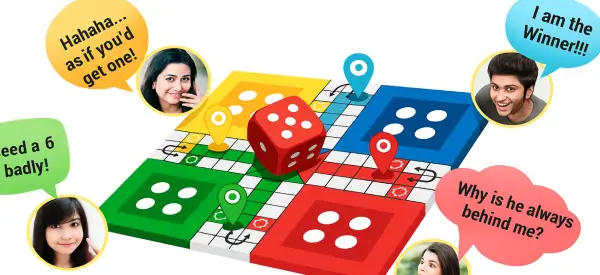
A real time multiplayer Ludo game built in Unity with Photon PUN, in app voice chat, video calling, text chat, and private rooms.
Last Updated: May 8, 2026
TLDR
Ludo Royale is a mobile multiplayer Ludo game developed by Nipsapp Game Studios. It is built in Unity and uses Photon PUN for real time multiplayer, Photon Chat for in game text messaging, and a WebRTC based video and voice SDK for face to face calls during matches.
Players can join public matches, invite friends to private rooms with a room code, and play 1v1, 2v2, or 4 player Ludo while talking through voice chat or video call. The game keeps the original Ludo rules and runs server validated turns to prevent cheating.
Game name: Ludo Royale
Developer: Nipsapp Game Studios
Genre: Board game, casual multiplayer
Engine: Unity (Unity3D)
Multiplayer: Photon PUN (Photon Unity Networking)
Text chat: Photon Chat
Voice and video: Real time video and voice SDK based on WebRTC
Modes: 1v1, 2v2, 4 player, private rooms with friends
Platforms: Android and iOS mobile
About the Game
Ludo Royale is a modern take on the classic Ludo board game. It keeps the rules people grew up with and adds the parts that make online play actually fun. You can play with strangers in matchmaking, or invite your friends and family into a private room and talk to them while you play.
The goal was simple. Make Ludo feel social again. Most online Ludo games feel quiet and lonely. Ludo Royale adds voice chat, video calling, and text chat directly inside the match, so playing online feels closer to sitting around the same table.
Genre: Board game, Ludo
Engine: Unity3D
Platforms: Android, iOS
Game Modes: 1v1, 2v2, 4 Player, Private Rooms
Built by: Nipsapp Game Studios
Key Features Explained
Real Time Multiplayer with Photon PUN
The multiplayer layer is built on Photon PUN. Photon handles room creation, player matchmaking, turn syncing, and reconnection. Each move, dice roll, and token position is sent through Photon RPCs so every player sees the same board state at the same time.
Photon was chosen because it handles low latency turn based syncing well, scales for casual mobile games, and works smoothly across Android and iOS.
In Game Voice Chat
Players can talk to each other while playing. Voice chat is integrated directly into the match screen, so there is no need to open WhatsApp or Discord on the side. Voice runs on a WebRTC based real time SDK with echo cancellation and noise suppression so background noise stays low.
Each player has a mute button and a per player volume control. Voice chat works in all modes, including 1v1, 2v2, and 4 player matches.
Video Calling Inside the Match
Ludo Royale supports live video calling between players during a game. Player camera feeds appear as small tiles on the board screen, so you can see your friends react to a six or a sneaky knockout. Video uses adaptive bitrate, so it scales down on weak networks and stays usable.
Video can be turned off by any player at any time. The game keeps running normally if one player has video off and another has it on.
Text Chat with Photon Chat
For players who don't want to talk, Ludo Royale has full text chat through Photon Chat. Photon Chat handles message delivery, channels, and presence. There is a quick chat row with preset messages like "Good move" and "Nice one" for fast taps, plus a full keyboard chat for longer messages.
Profanity filtering and report options are built in to keep things clean.
Private Rooms with Room Codes
Any player can create a private room and share a short room code with friends. Friends enter the code and join straight into the same match. Private rooms support all game modes and all chat features. This is the most used mode by families and friend groups.
Hosts can set the mode, pick a board theme, and start when everyone is ready.
Multiple Game Modes
Ludo Royale supports four main modes. 1v1 for quick head to head matches. 2v2 for team play with paired tokens. Classic 4 player for the full traditional game. And private rooms where friends pick the rules. Quick match and ranked queues are available for public play.
Fair Play and Server Validated Moves
All dice rolls and moves are validated on a backend server. The client cannot fake a roll or move a token outside the rules. This stops common Ludo cheating tools that other games suffer from.
Customization
Players can pick from several board themes, dice skins, and token sets. Some are unlocked by playing matches, others by completing daily missions. None of the cosmetics affect gameplay.
Tech Stack
Unity (Unity3D)
Main game engine. Handles 2D board rendering, animations, UI, and the full client side game loop.
C#
Primary scripting language for game logic, networking calls, and UI events.
Photon PUN
Real time multiplayer networking. Used for rooms, matchmaking, and syncing turns and dice rolls.
Photon Chat
In game text chat, channels, and presence. Runs on Photon's chat infrastructure.
WebRTC based Video SDK
Live voice and video calling between players inside the match. Handles audio routing, video tiles, and adaptive streaming.
Backend Game Server
Validates dice rolls, moves, and match results. Stops cheating and keeps player stats accurate.
Firebase
Used for authentication, push notifications, crash reporting, and analytics.
Cloud Storage
Player profiles, cosmetics, match history, and friend lists.
Challenges
Keeping Turns in Sync
In Ludo, every player needs to see the same dice roll and the same token positions at the exact same time. With four players on different networks, that's harder than it sounds. Lag spikes, dropped packets, and slow phones can all break the flow.
Running Video and a Game Together
Live video is heavy. It uses CPU, GPU, network, and battery. Running it next to a real time multiplayer game on a budget Android phone needed careful tuning so the game stayed smooth.
Stopping Cheaters
Ludo has a long history of cheat tools that fake dice rolls or skip turns. Any open client logic gets exploited fast.
Network Drops Mid Match
Mobile networks drop. Players walk into elevators, switch from Wi-Fi to 4G, or lose signal for 10 seconds. The game has to handle that without ending the match unfairly.
Voice and Video Quality on Weak Networks
Many players are on 4G with limited bandwidth. Pushing full HD video would kill the experience.
Solutions
Photon PUN with State Reconciliation
Turn state is held by the server and synced through Photon RPCs. If a client falls behind, it pulls the latest state and catches up. This keeps all four players on the same board without visible glitches.
Adaptive Video and Voice
The video SDK drops resolution and frame rate when the network is weak. On very slow connections, video pauses and voice keeps working. Voice gets priority because losing the game's audio is worse than losing the picture.
Server Side Dice and Move Validation
Dice rolls are generated on the server, not the client. Every move is checked against the rules before it is accepted. Cheat tools that modify the local app simply have nothing to talk to.
Reconnect and Resume
If a player drops, the game pauses for a short window and lets them rejoin. Their tokens, turn order, and chat history all come back. Long disconnects fall back to an AI bot so the other players are not stuck waiting forever.
Lightweight Mobile Build
Asset bundles, texture compression, and Unity's IL2CPP build pipeline keep the install size small and the runtime fast on low end Android phones.
Results and Impact
Higher Engagement
Sessions are longer because of voice and video chat
Family Friendly
Used by all age groups across regions
Stable Multiplayer
Smooth sync across 1v1, 2v2, and 4 player modes
Strong Retention
Private rooms drive repeat play with friends
Frequently Asked Questions
What is Ludo Royale?
Ludo Royale is a real time multiplayer Ludo game built by Nipsapp Game Studios. It supports 1v1, 2v2, and 4 player matches with in app voice chat, video calling, text chat, and private rooms.
Which engine was used to build Ludo Royale?
Ludo Royale is built in Unity (Unity3D) using C# for game logic and UI.
What multiplayer technology does Ludo Royale use?
The game uses Photon PUN (Photon Unity Networking) for real time multiplayer. Photon handles room creation, matchmaking, and syncing turns between players.
How does the in game text chat work?
Text chat is powered by Photon Chat. It supports private and group messages inside a match, plus quick preset messages for fast tapping.
Does Ludo Royale support voice chat?
Yes. Voice chat runs through a WebRTC based real time audio SDK and works in all multiplayer modes. Each player has mute and volume controls.
Does Ludo Royale support video calling?
Yes. Players can turn on their camera during a match and see each other on small video tiles next to the board. Video uses adaptive bitrate so it works on slower networks.
Can I play with my friends in a private room?
Yes. Any player can create a private room and share a short room code. Friends enter the code to join the same match. Private rooms support voice, video, and text chat.
How does Ludo Royale prevent cheating?
Dice rolls are generated on the server. Every move is validated on the server before it is applied. This blocks cheat tools that try to fake rolls or skip turns on the client.
What happens if a player loses connection?
The match pauses for a short window so the player can reconnect. If the player does not return, an AI bot takes over the remaining turns so the other players can finish the game.
Which platforms does Ludo Royale run on?
Ludo Royale is a mobile game and runs on Android and iOS.
Why is Nipsapp a good fit for multiplayer board games?
Nipsapp Game Studios builds real time multiplayer systems, integrates voice and video SDKs, and ships polished casual games on Unity. The team has deep experience with Photon and live ops.
Does Nipsapp provide post launch support?
Yes. Nipsapp handles ongoing updates, server maintenance, security patches, and new feature releases after launch.
Related Case Studies
Explore more of the games and interactive experiences NipsApp Game Studios has shipped across mobile, VR, AR, blockchain, and beyond.
 View on Apple Maps
 View on Google Maps