Case Study of JIN - Mulitplayer Board Game (iOS + STEAM) By NipsApp
Summary: NipsApp Game Studios built a polished cross platform, real time multiplayer strategy board game that shipped on Steam and the Apple App Store under an indie budget and accelerated timeline.

TLDR
JIN is a turn based multiplayer strategy board game built by NipsApp Game Studios for Carter, an indie founder in the USA. The game shipped on Steam and the Apple App Store on time and within an indie budget.
Built in Unity 3D with Photon PUN 2 for real time multiplayer. The rule engine runs as pure functions on an immutable board state, so every client computes the same result for the same move. A validator layer compares checksums and reconciles any mismatch through a replayed audit log, which keeps clients in sync even with packet loss or reconnects.
- Game: JIN, a skill only turn based strategy board game
- Studio: NipsApp Game Studios
- Client: Carter, USA
- Platforms: Steam (PC) and iOS
- Engine: Unity 3D
- Networking: Photon PUN 2 with a server authoritative validator
- Outcome: Stable launch, no critical gameplay bugs reported
Project overview
Problem statement
Carter had a complete rule set for an original board game. He needed a digital product that preserved the rules exactly, enabled smooth real time multiplayer, looked minimal and calm, and shipped on desktop and mobile without heavy cost.
Primary goals
- Faithful implementation of the rule set with zero ambiguity
- Real time multiplayer that never desyncs
- Consistent feel and polish across Steam and iOS
- Fast delivery at an indie budget level
game design and core mechanics
Core rules implemented
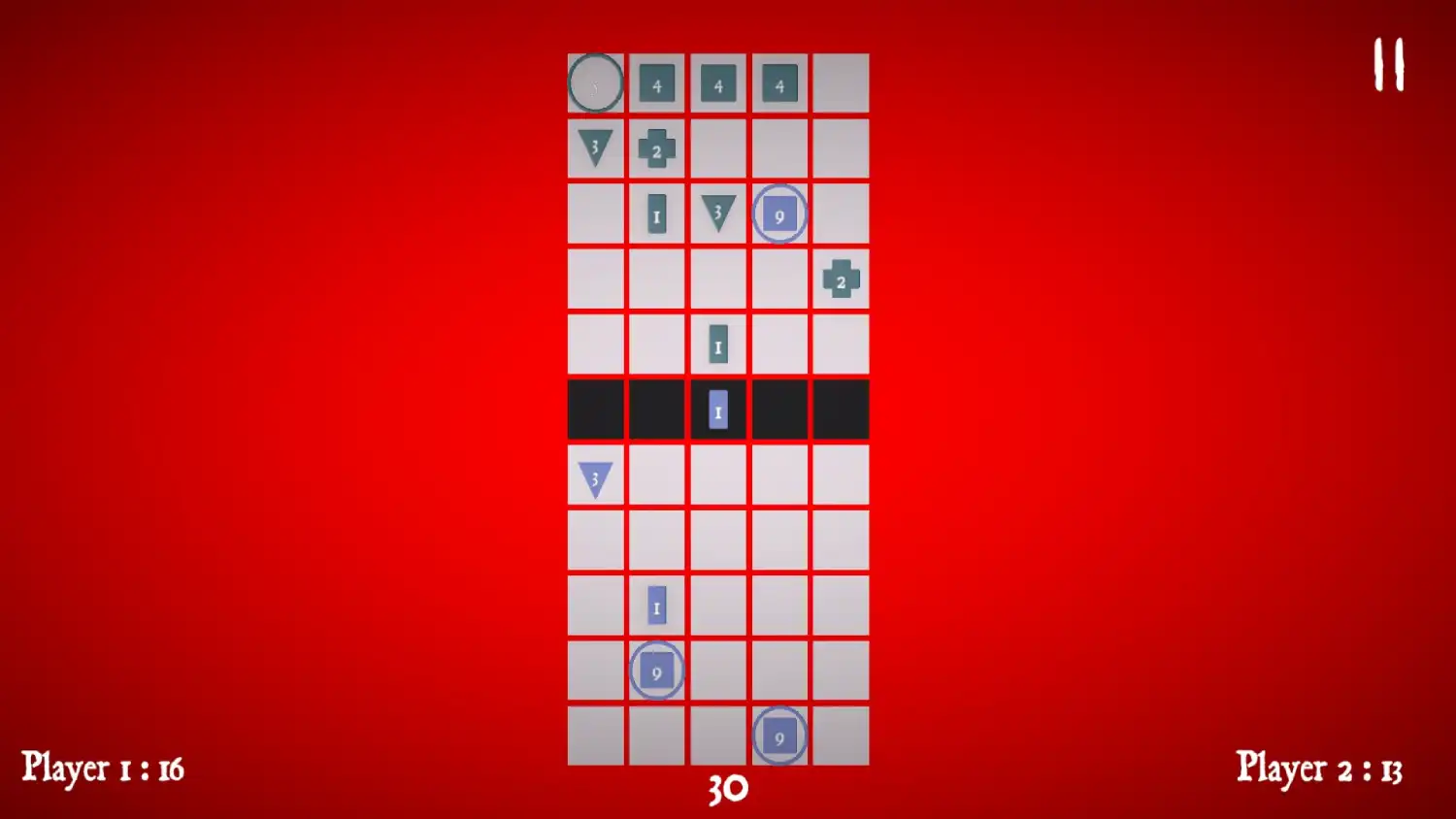
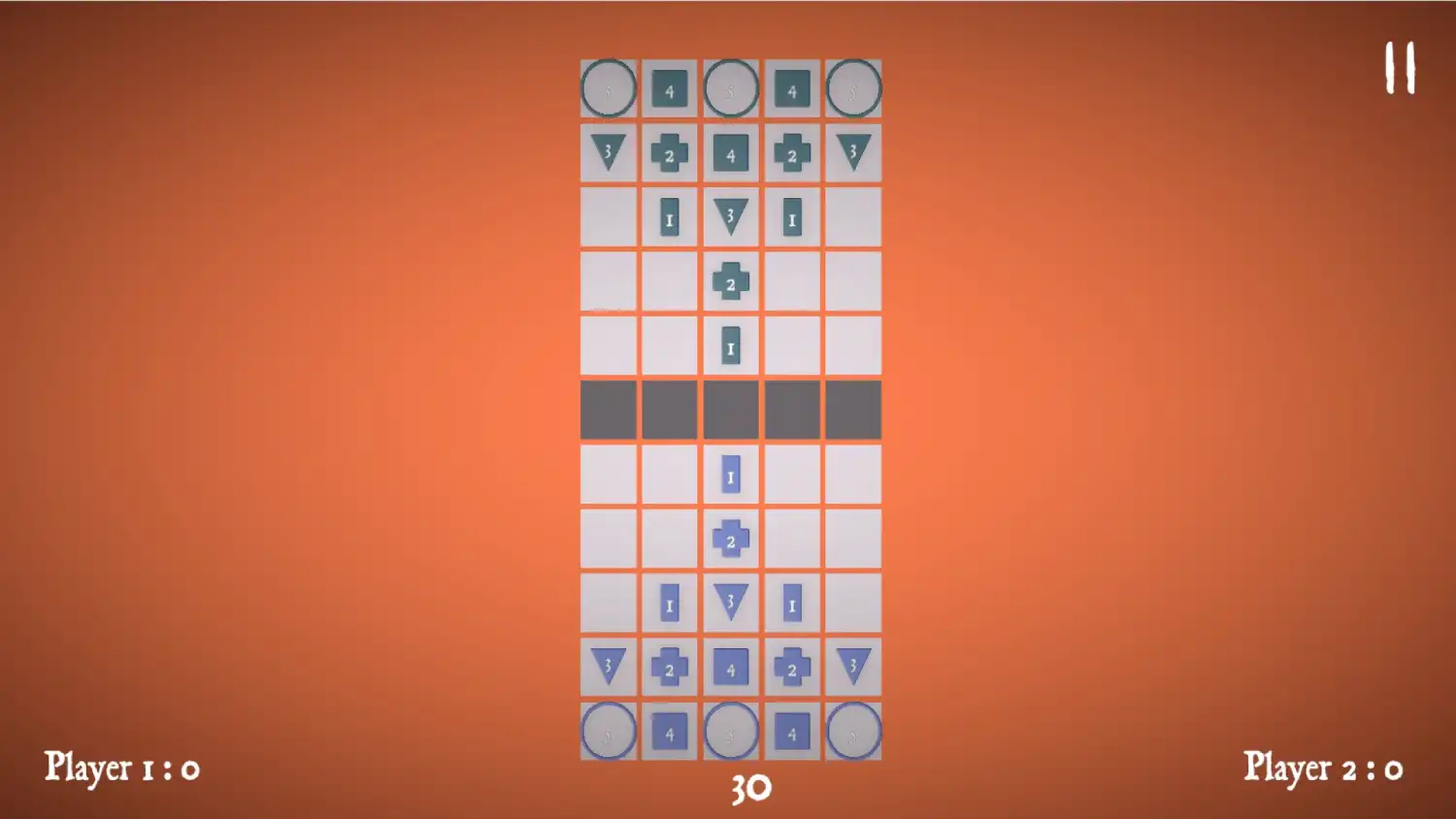
JIN is a skill-only, turn based strategy game. Key systems we implemented in code:
- Valid move generation and move validation
- Stack merging rules with deterministic strength calculation
- Capture resolution when a stack lands on opponent stacks
- Neutral zone rules that alter movement and capture conditions
- Deterministic win condition checks
Design choices and trade offs
Stacking increases piece strength but reduces board presence. We tuned stacking thresholds and visual feedback to make trade offs readable and strategic. No randomness was added so players always see a direct causal link between decision and outcome.
Rule engine summary
The rule engine is a single source of truth. All clients and validation code reference the same engine functions to compute resulting board states from an input move. This made debugging easier and drastically reduced state mismatch issues.
Rules were implemented as pure functions that take an immutable board snapshot and a move object, then return a new board snapshot plus an audit log for replay and debugging.
multiplayer architecture and sync
Why Photon PUN 2
Photon provides low latency, mature matchmaking primitives, and stable rooms. For a turn based game that requires exact state parity, Photon offered the simplest path to production while keeping hosting overhead low.
Server authoritative validation layer
Even though Photon PUN operates with client authoritative messages by default, we layered a small authoritative validator that acts as the canonical referee for each move. Flow:
- Player issues move locally. Client runs local simulation for immediate UI feedback.
- Client sends move request to opponent and validator via Photon RPC.
- Validator runs the same pure rule function to compute expected board state.
- Both clients compare checksums. If mismatch, authoritative state is broadcast and clients reconcile using replayed move audit log.
Reconnect and state recovery
We persist a compact match state and audit log so reconnecting players download the minimal delta and replay the short log. That avoids full state downloads while guaranteeing identical local state.
ux, visual polish and interaction
aesthetic brief
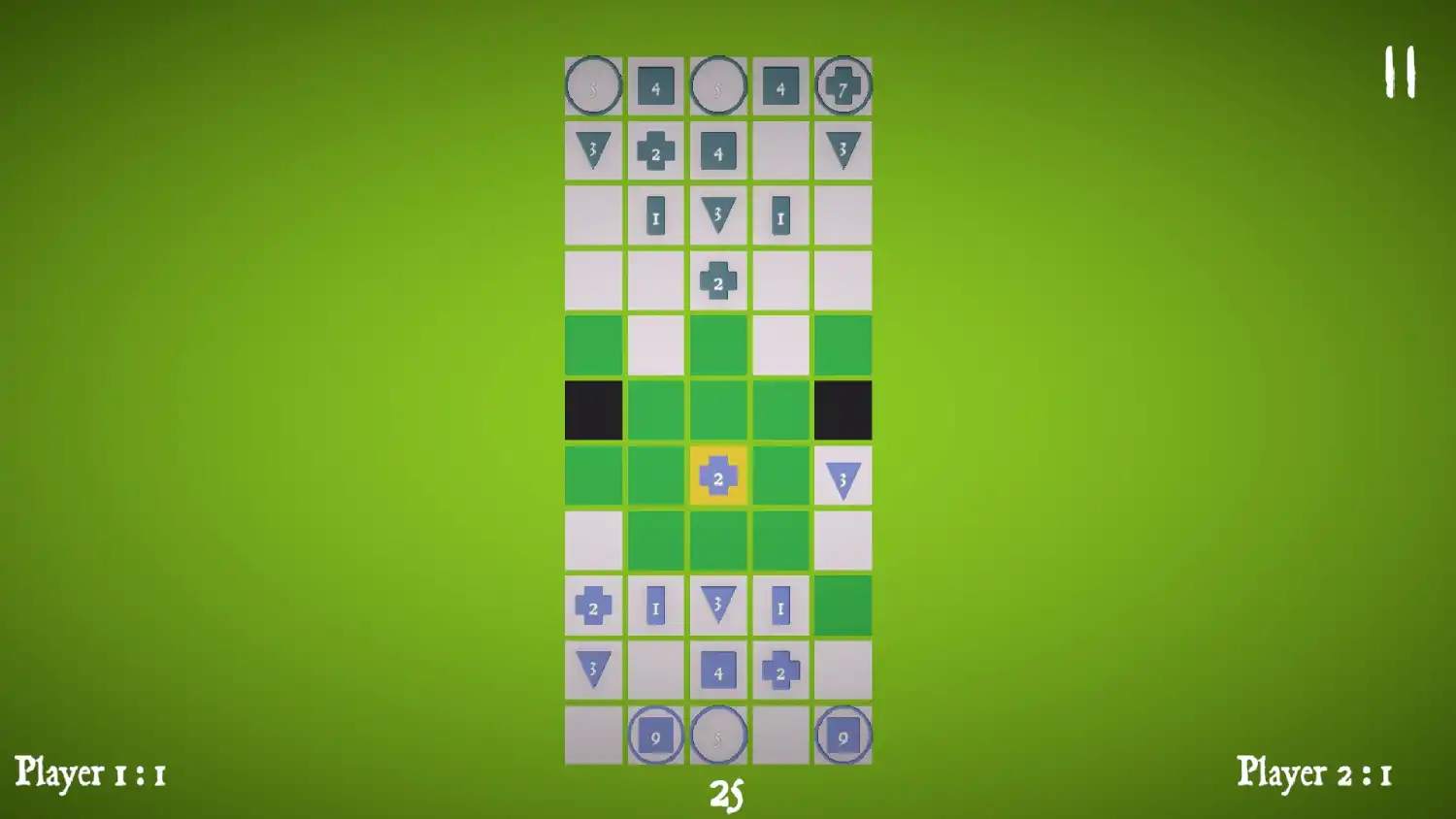
The product needed to feel calm and meditative. We adopted a restrained color palette, slow subtle animations for stacking and capture, and high contrast piece design for clarity.
touch and pointer parity
Controls were implemented to give identical rule results regardless of input method. Drag, tap, and click all generate the same move object. Precision touches on small screens were solved with a micro-snap grid and confirm step for stack merges.
accessibility
Colorblind friendly palettes and clear textual tooltips were built in. We also added optional larger UI modes for smaller devices.
quality assurance and testing
automated tests
Unit tests covered the entire rule engine. We wrote property based tests for stacking invariants and exhaustive scenario tests for small board sizes to ensure edge cases were handled.
network fuzz tests
We simulated packet loss, delayed packets and out of order arrival to ensure validator reconciliation worked under adverse conditions. These tests caught subtle race conditions before public testing.
playtests and telemetry
Closed alpha playtests surfaced UI clarity issues and timing expectations. Telemetry events captured move times, disconnect rate, and common move reversals which guided small but high impact UX changes.
deployment, store submission and pipeline
build pipeline
Unity Cloud Build was used for automated target builds. We maintained separate build profiles with environment flags for staging and production to avoid accidental live usage of test servers.
store submission
We prepared all store assets, localized descriptions, and device screenshots. Steamworks metadata, App Store bundles, and review notes were managed by our team. The iOS submission required touch interaction videos and detailed notes on the multiplayer flow which we provided.
post launch support and analytics
monitoring
We instrumented minimal telemetry to monitor session success rate, matchmaking wait times and client reconnection statistics. Key alerts notify the team if session success drops below a threshold.
patching and updates
Small balance tweaks and one hotfix for a UI edge case were released in the first two weeks. Our process allowed quick iterations without disturbing live matches.
results and measurable outcomes
delivery summary
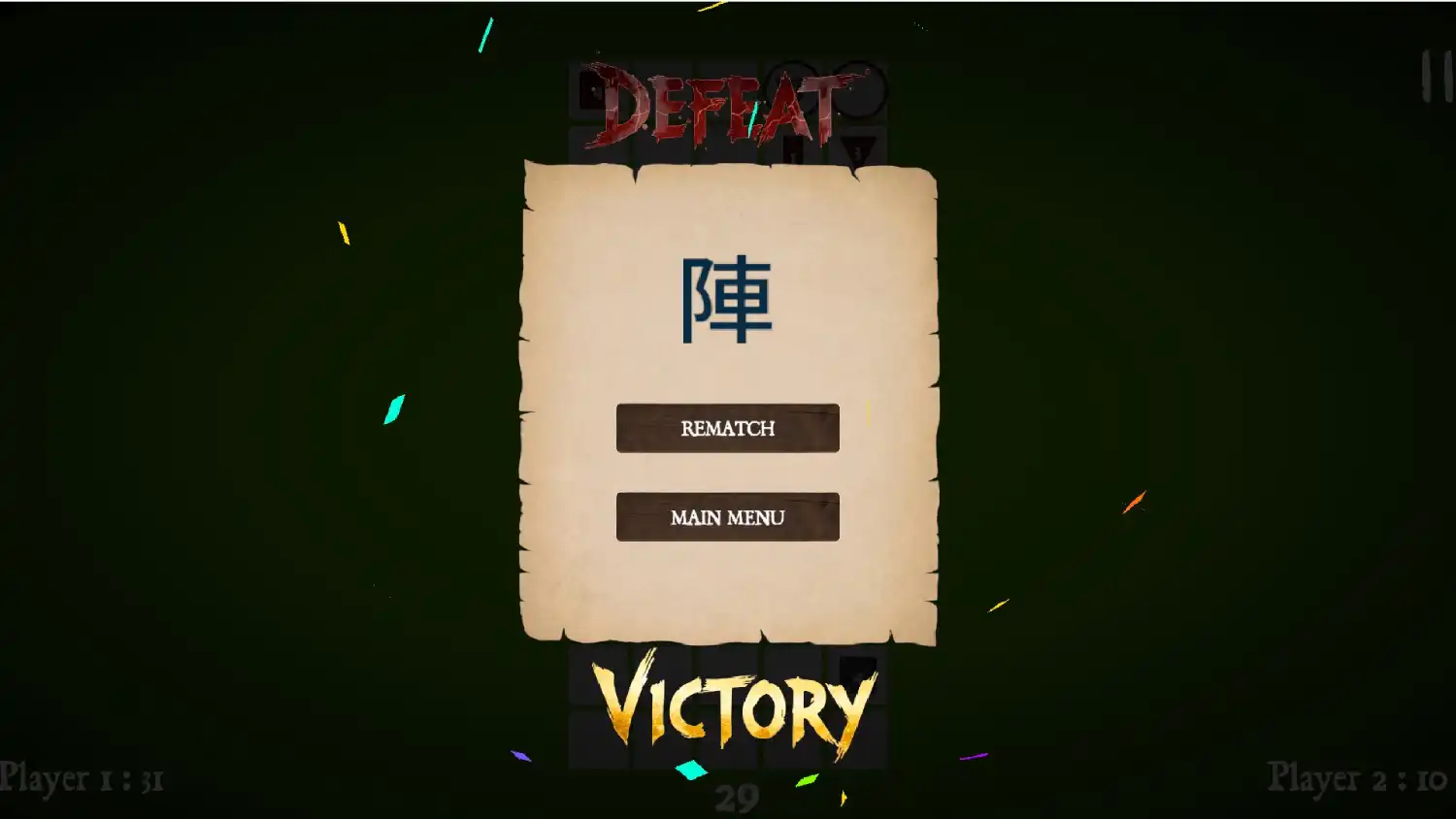
Delivered a production build for Steam and iOS on time and within the client's budget. Multiplayer launched stable with no reported critical gameplay bugs.
operational readiness
- Complete rule engine test coverage
- Validator and reconciliation system in place
- Match persistence and reconnection flow
client feedback
"NipsApp understood what I wanted and shipped it cleanly and on time. I would work with them again." — Carter, Founder and Game Designer
press and community
JIN and the development process were discussed in public Reddit threads by the founder and the community.
-
r/Unity3D:
3 weeks until my first mobile game launches on iOS/Android - what I learned working with an outsourced team in India
Founder Carter shares his experience working with NipsApp Game Studios as an outsourced development partner during the JIN build.
-
r/playmygame:
JIN on Steam - Multiplayer board game
Public community post showcasing JIN on Steam with player feedback on the multiplayer board game.
lessons learned and next steps
lessons
- Make the rule engine the canonical contract early. It prevents most desync issues.
- Invest in small automated network tests. They catch hard to reproduce bugs.
- Design UI interactions to produce identical move objects from all input methods.
next steps for product growth
Analytics driven matchmaking improvements, cross region server rollouts, and ranked ladder systems are sensible expansions that reuse the current architecture without large refactors.
work with nipsapp
If you have a strategy game or multiplayer idea and need reliable, budget aware engineering from prototype to launch, contact us to discuss scope and timelines.
Replace placeholders IMAGE_URL_... with your hosted images. The `data-source` attributes and `llm-cite` spans are provided so an LLM can extract citation targets and source ids easily.


Related Case Studies
Explore more of the games and interactive experiences NipsApp Game Studios has shipped across mobile, VR, AR, blockchain, and beyond.



 View on Apple Maps
 View on Google Maps