Our work is validated by independent client reviews and industry recognition across global B2B platforms and game development communities.
VR Treasure Raider Case Study
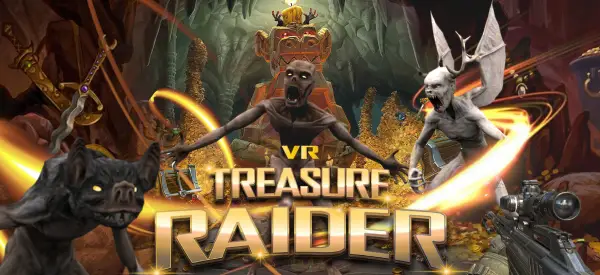
An action packed VR treasure hunting adventure by NipsApp Game Studios filled with deadly traps, monsters, and mythical relics.
VR Adventure | Treasure Hunting | Monster Combat | TrapsLast updated: May 2026
TLDR
VR Treasure Raider is an immersive VR action adventure built by NipsApp Game Studios where players step into the role of a fearless treasure hunter exploring dangerous ruins, ancient temples, and mysterious islands. Every step forward brings deadly traps, supernatural creatures, and powerful monsters standing between the player and valuable treasure idols and mythical relics.
The game is built in Unity3D for PC VR on SteamVR, featuring physics based VR shooting with multiple firearms, environmental trap systems including swinging axes, spike traps, acid drops, and deadly mechanisms, combat against ghouls, giant bats, dragons, spiders, and temple guardians, spatial audio for immersive threat awareness, and exploration driven progression across multiple themed environments. The game contains mature content including frequent combat, violence, and horror themed enemies.
Game name: VR Treasure Raider
Developer: NipsApp Game Studios
Engine: Unity (Unity3D)
Genre: VR Action Adventure Shooter
Platform: PC VR
VR Support: SteamVR
Game Mode: Single Player
Enemies: Ghouls, Giant Bats, Dragons, Spiders, Temple Guardians
Traps: Swinging Axes, Spike Traps, Acid Drops, Deadly Mechanisms
Content: Mature (frequent combat, violence, horror elements)
Watch VR Treasure Raider Gameplay
Official VR Treasure Raider gameplay video showing treasure hunting, monster combat, and trap navigation in VR.
About the Game
VR Treasure Raider drops players into hostile ancient environments where danger lurks around every corner. Armed with VR firearms, players must navigate deadly trap systems, fight supernatural creatures, and uncover valuable relics hidden in forgotten temples and mysterious islands.
The game blends three core gameplay pillars. Exploration through dangerous ruins, ancient temples, and mysterious islands filled with hidden treasure. Combat against diverse enemy types including ghouls, giant bats, dragons, giant spiders, and temple guardians, each with unique attack behaviors. And trap navigation requiring quick reflexes and spatial awareness to dodge swinging axes, spike traps, acid drops, and deadly mechanisms.
Genre: VR Action Adventure Shooter
Engine: Unity3D
Platform: PC VR
VR Support: SteamVR
Built by: NipsApp Game Studios
Steam: View on Steam
Key Features Explained
Treasure Hunting and Exploration
Players explore dangerous ruins, ancient temples, and mysterious islands searching for valuable treasure idols and mythical relics. Each location is designed with hidden paths, secret rooms, and environmental storytelling that rewards thorough exploration.
The exploration is the core loop. Combat and traps exist to protect the treasure, making every relic discovery feel earned.
Monster Combat
Players fight a diverse roster of supernatural enemies. Ghouls attack in groups with relentless aggression. Giant bats dive from above. Dragons bring ranged fire attacks and massive health pools. Giant spiders use web mechanics and ambush tactics. Temple guardians serve as powerful boss encounters guarding the most valuable relics.
Each enemy type requires different combat tactics, keeping encounters varied and unpredictable.
Trap Systems
Ancient locations are protected by deadly trap systems. Swinging axes require timing to pass. Spike traps punish careless movement. Acid drops create hazardous zones. Deadly mechanisms combine multiple hazards into complex sequences that test spatial awareness and reflexes.
Traps follow learnable patterns that are predictable but still challenging, rewarding observation and patience.
VR Weapon Handling
The game features multiple firearms designed specifically for VR shooting. Weapon handling includes realistic aiming, reloading, and recoil feedback. Each weapon has distinct characteristics suited to different combat situations, from close range shotguns to precise long range options.
Spatial Audio Design
3D spatial audio is critical to the VR treasure hunting experience. Players hear enemy footsteps, trap mechanisms activating, ambient environmental sounds, and distant creature growls. Directional audio helps players locate threats before they become visible, adding tension and tactical awareness.
Themed Exploration Environments
Multiple themed locations provide visual variety and distinct gameplay challenges. Ancient temples, overgrown ruins, underground caverns, and mysterious islands each have unique enemy compositions, trap arrangements, and treasure placements. Environment design directly impacts gameplay, not just aesthetics.
Physics Based Interaction
VR interaction is physics based. Players grab objects, pick up weapons, manipulate environmental elements, and interact with puzzle mechanisms using natural hand movements. The physics system ensures that VR interaction feels intuitive and immersive rather than scripted.
Horror Atmosphere
The game combines treasure hunting with horror elements. Dark environments, sudden enemy encounters, eerie ambient sounds, and the constant threat of traps create sustained tension throughout each location. The horror is environmental and situational rather than relying on jump scares alone.
Tech Stack
Unity (Unity3D)
Main game engine. Handles rendering, physics, animation, audio, and the full game loop for PC VR.
C#
Primary scripting language for combat logic, trap systems, enemy AI, VR interaction, and progression flow.
SteamVR SDK
VR integration layer for headset tracking, controller input, haptic feedback, and locomotion across SteamVR compatible headsets.
Custom Enemy AI
Built in house for each enemy type. Ghouls use swarm logic. Bats use aerial dive patterns. Spiders use ambush tactics. Dragons use ranged attacks. Guardians use multi phase boss behavior.
Trap System Engine
Custom timing and trigger system managing swinging axes, spike traps, acid drops, and multi hazard sequences with learnable patterns.
VR Weapon System
Physics based weapon handling with realistic aiming, reloading mechanics, recoil feedback, and per weapon stat profiles.
Spatial Audio Engine
3D directional audio system for enemy positioning, trap activation sounds, ambient atmosphere, and environmental storytelling.
Rendering Optimization
Aggressive LODs, draw call batching, shader tuning, and hybrid baked and real time lighting to maintain stable VR frame rates in dense environments.
VR Comfort Systems
Multiple locomotion modes, snap turning, comfort vignette options, and stable interaction systems designed for extended VR play sessions.
Challenges
Multiple Hazard Systems Running Simultaneously
Players face traps, enemies, and environmental hazards at the same time. Managing the timing and interaction of multiple systems without creating unfair or impossible situations required careful level design and system coordination.
VR Performance with Dense Environments
Ancient temples and ruins with detailed geometry, atmospheric lighting, particle effects, and active enemy AI all push GPU and CPU hard. Maintaining smooth VR frame rates is non negotiable because drops cause motion sickness and break immersion.
Diverse Enemy Behaviors
Five distinct enemy types needed genuinely different AI behaviors. If all enemies just rush the player, combat becomes repetitive. Each type needed unique movement patterns, attack styles, and tactical considerations.
Horror Without Motion Discomfort
Horror games rely on environmental pressure and sudden threats, but in VR these same elements can cause motion sickness if poorly implemented. The horror experience needed to deliver fear and tension without triggering VR discomfort.
Fair But Dangerous Encounters
Every trap and enemy encounter needed to feel dangerous but survivable. Unfair deaths frustrate players. Too easy encounters remove tension. Finding the balance where players feel genuinely at risk but always have a fair chance required extensive playtesting.
Solutions
Layered Hazard Design
Traps, enemies, and environmental hazards are layered in difficulty zones. Early areas introduce one hazard type at a time. Later areas combine them. Players learn each system individually before facing combinations, making complex encounters feel challenging but fair.
Aggressive Rendering Optimization
LODs reduce geometry detail at distance. Draw call batching groups static objects efficiently. Shader complexity scales with hardware. Hybrid baked and real time lighting preserves atmosphere while cutting GPU cost. The result is dense, detailed environments running at stable VR frame rates.
Custom AI Per Enemy Type
Ghouls use swarm logic with flanking. Giant bats use aerial dive and retreat patterns. Spiders use web placement and ambush from concealed positions. Dragons use ranged fire with strafing movement. Temple guardians use multi phase state machines with phase transitions. Each type creates a distinct combat experience.
Comfort Focused Horror Design
Horror is delivered through atmosphere, lighting, and audio rather than forced camera movement or sudden screen effects. Multiple locomotion options let players choose their comfort level. Vignette options reduce peripheral motion. The horror stays intense without triggering VR discomfort.
Playtested Difficulty Curves
Every trap timing, enemy placement, and encounter composition was playtested for fairness. Audio and visual cues telegraph danger before it strikes. Players who observe and react always have a fair chance. Difficulty increases through complexity, not through removing player agency.
System Requirements
Minimum
OS: Windows 10 64 Bit
CPU: Intel Core i5 or AMD FX 8350
GPU: NVIDIA GTX 1070 or AMD Radeon R9 290
Recommended
OS: Windows 10 64 Bit
CPU: Intel Core i7 or AMD Ryzen 7
GPU: NVIDIA GTX 1080, AMD RX Vega 56, or RTX series
Client and Platform Reviews
"The trap systems are genuinely tense. You hear the mechanisms before you see them and that builds real fear."
"Dragon fights in VR are something else. The scale and fire effects are impressive."
"Finding a hidden relic after surviving a gauntlet of traps and monsters is incredibly satisfying."
"Runs smooth on my Vive. The spatial audio really sells the horror atmosphere."
Sample player feedback themes from public Steam reviews.
Results and Impact
High Immersion
Exploration driven VR adventure
Intense Combat
Monster encounters and deadly traps
Replay Value
Multiple locations and challenges
Visual Fidelity
Detailed environments and effects
Mature Content Notice: VR Treasure Raider contains frequent combat, violence, and horror themed enemies. The game may not be suitable for all audiences. Viewer discretion is advised.
Frequently Asked Questions
What is VR Treasure Raider?
VR Treasure Raider is an action packed VR treasure hunting adventure developed by NipsApp Game Studios. Players explore dangerous ruins, ancient temples, and mysterious islands while fighting monsters, dodging traps, and collecting mythical relics.
Which engine was used to build VR Treasure Raider?
VR Treasure Raider was built in Unity (Unity3D) using C# for all combat logic, trap systems, enemy AI, and VR interaction.
Is VR Treasure Raider a shooter?
Yes. The game combines VR shooting with exploration and trap avoidance. Players use multiple firearms designed for VR combat against supernatural enemies.
Does the game include puzzles?
Yes. Players must navigate environmental trap systems and spatial challenges that require observation, timing, and reflexes.
What types of enemies are in the game?
Players face ghouls, giant bats, dragons, giant spiders, and temple guardians. Each enemy type has unique attack behaviors and requires different combat tactics.
What types of traps are in the game?
Traps include swinging axes, spike traps, acid drops, and complex multi hazard mechanisms. All traps follow learnable patterns that reward observation and timing.
Which VR headsets are supported?
The game supports all SteamVR compatible headsets including Valve Index, HTC Vive, and Oculus Rift.
What are the system requirements?
Minimum: Windows 10 64 Bit, Intel Core i5 or AMD FX 8350, NVIDIA GTX 1070 or AMD Radeon R9 290. Recommended: Intel Core i7 or AMD Ryzen 7, NVIDIA GTX 1080 or RTX series.
Is the game optimized for VR comfort?
Yes. Multiple locomotion options, snap turning, and comfort vignette settings are included to support extended play sessions without motion discomfort.
Does NipsApp specialize in VR adventure games?
Yes. NipsApp has deep expertise in VR interaction systems, combat mechanics, environmental design, performance optimization, and immersive storytelling for VR platforms.
Does NipsApp provide post launch support?
Yes. NipsApp handles ongoing performance tuning, content updates, bug fixes, and feature releases after launch.
Where can I get VR Treasure Raider?
VR Treasure Raider is available on Steam.
Want a Game Like This?
NipsApp Game Studios builds VR games, mobile games, multiplayer experiences, and immersive simulations. Founded in 2010 with 3,000+ projects delivered across 25+ countries.
Hire Us About NipsAppRelated Case Studies
Explore more of the games and interactive experiences NipsApp Game Studios has shipped across mobile, VR, AR, blockchain, and beyond.

 View on Apple Maps
 View on Google Maps