Our work is validated by independent client reviews and industry recognition across global B2B platforms and game development communities.
Crowhille VR Case Study
A story driven VR horror investigation game by Nipsapp Game Studios, built for Saturn VR with AAA lighting, deep interaction, and stable 90 FPS performance.
Built in Unity for SteamVRLast updated: May 2026
TLDR
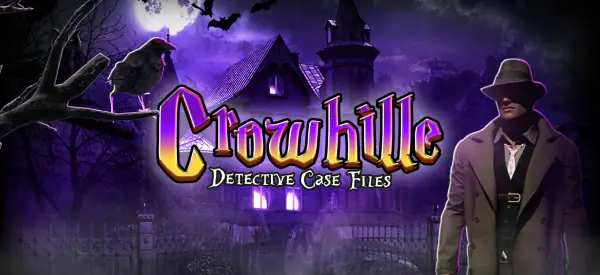
Crowhille - Detective Case Files VR is a story driven VR horror investigation game built by Nipsapp Game Studios for Saturn VR. Players step into the boots of a Welsh detective sent by Prince Regent King George IV to investigate a long abandoned asylum where something is very wrong.
The game blends investigation, combat, environmental puzzles, and psychological horror. It draws inspiration from titles like Resident Evil VR and Half-Life Alyx for interaction depth. Built in Unity3D with SteamVR support, AAA lighting, physics based grabbing, an air grab system, and VR native puzzles. Performance is tuned to hold a stable 90 FPS for player comfort.
Game name: Crowhille - Detective Case Files VR
Developer: Nipsapp Game Studios
Client: Saturn VR
Engine: Unity3D
VR support: SteamVR
Genre: VR horror investigation
Platform: PC VR
Performance target: Stable 90 FPS
Distribution: Steam
Watch Crowhille VR Gameplay
Official Crowhille VR gameplay video showing the asylum environment, VR interaction, and horror atmosphere.
About the Game
Crowhille drops the player into the worn boots of a Welsh detective in a dark, period setting. Prince Regent King George IV has issued orders to investigate a long abandoned asylum, and what waits inside is not just rotting walls and old paperwork. The story unfolds through exploration, found documents, and scripted events as the player pieces things together.
The game mixes investigation work with VR combat, environmental puzzles built for hand tracking, and psychological horror that leans on lighting and sound rather than cheap jump scares. It's a slower, heavier experience aimed at players who want story and atmosphere from VR, not just action.
Genre: VR horror investigation
Engine: Unity3D
Platform: PC VR
VR Support: SteamVR
Game Modes: Single player narrative
Built by: Nipsapp Game Studios
Client: Saturn VR
Steam: View on Steam
Key Features Explained
Advanced VR Locomotion
The game ships with smooth locomotion, snap turning, and a full set of comfort options. Players who get motion sick can dial things back. Players who want full immersion can keep everything on. The point is letting the player tune the experience for their own body and headset.
Long play sessions are common in story driven VR, so locomotion was tuned with that in mind. No forced movement that the player can't override.
Physics Based Object Interaction
Everything you can pick up behaves like a real object. Grab a candle, rotate it, throw it across the room, watch it tumble. Drawers open. Books can be flipped through. Weapons have weight. The interaction system uses Unity's physics to make every object feel real in your hands.
This kind of natural handling is what sells VR. It pulls the player into the world without breaking the spell.
Air Grab System
Inspired by Half-Life Alyx, the air grab lets the player pull distant objects toward their hand without walking over to them. Useful in tight asylum corridors, on shelves you can't reach, or when something is just out of arm's range. It saves time and keeps the pacing tight.
The pull animation and sound feedback are tuned so the action feels satisfying every time.
VR Native Puzzles
Puzzles are built for VR from the ground up, not lifted from a flat screen game. Players solve things by physically rotating, aligning, fitting, and assembling objects with their hands. No abstract menu puzzles. Everything is in the world, in front of you, and you solve it with your body.
VR Combat
Combat encounters use VR precision. Weapons have to be aimed, swung, or fired with intent. Enemies react to the player's actual movement. There's no auto aim crutch. Hits, blocks, and reloads all run through hand tracked input which keeps fights tense and personal.
Story Driven Progression
The narrative unfolds through the world itself. Letters on desks, scratched notes on walls, photographs in drawers, and scripted events the player walks into. There's no narrator hand holding. The player digs and finds the story piece by piece, the way a detective actually would.
AAA Lighting
The asylum uses a hybrid lighting setup. Baked lighting handles the static atmosphere and gives every room its mood. Real time lighting handles dynamic events like flickering bulbs, moving torches, and lightning through windows. Together they sell the horror without tanking performance.
Volumetric Effects
Fog rolls through the corridors. Light shafts cut through dust. Particle effects float in the air. These small details turn the asylum from a 3D model into a place that feels heavy and lived in. They also help direct the player's eye toward what matters.
Spatial Audio
Sound is positioned in 3D space. A creak behind you is actually behind you. Footsteps fade as someone walks away. The asylum's ambient bed shifts based on where you are in the building. In horror VR, audio is half the experience, and Crowhille leans into that.
High Detail Environments
The asylum is built with layered storytelling in mind. Patient rooms, surgical wings, locked offices, and basement tunnels all carry their own props, their own decay, and their own clues. The world rewards players who slow down and look around.
Tech Stack
Unity3D
Main engine for the game. Handles rendering, physics, audio, animation, and the full VR loop.
C#
Primary scripting language for interaction logic, AI, puzzles, and narrative event handling.
SteamVR / OpenXR
VR runtime support for PC VR headsets. Handles tracking, controller input, and headset rendering.
Unity XR Interaction Toolkit
Used as the base for hand tracking, grabbing, and VR specific input handling, with custom layers on top.
Custom Interaction System
Built in house for physics based grabbing, the air grab pull, weapon handling, and puzzle interactions.
Hybrid Lighting Pipeline
Baked global illumination plus real time lights and shadows tuned for VR performance and horror mood.
Volumetric and Particle Systems
Fog, light shafts, and atmospheric particles built with Unity's particle system and post processing stack.
Spatial Audio Engine
3D positional sound for footsteps, ambient cues, and event audio, tied to player head position in VR.
Steam Distribution
Shipped on Steam with VR system requirements, build pipeline tuned for SteamVR compatibility.
Challenges
High Fidelity VR Rendering
Pushing AAA looking lighting, dense environments, and atmospheric effects in VR is a hard problem. Every frame has to render twice, once per eye, and the budget for visual quality is much tighter than a flat screen game.
Holding 90 FPS
VR comfort depends on a stable 90 FPS. Drop below that and players start feeling sick. Hitting and holding that frame rate while running heavy lighting and interaction systems takes constant tuning.
Complex Interactions Running Together
Physics based grabbing, the air grab system, puzzle objects, and combat all run at the same time. Each one adds load. Making them all behave correctly without stepping on each other was a real engineering job.
Horror Without Motion Sickness
Horror often relies on quick movement, sudden camera shifts, and tense pacing. In VR, those same tools can make players ill. The game had to feel scary without breaking comfort.
Building VR Native Puzzles
Designing puzzles that only work in VR, where the player uses their actual hands, means rethinking puzzle design from scratch. They need to be solvable, fair, and physically satisfying without becoming clumsy.
Solutions
Aggressive Rendering Optimization
The team used heavy batching, mesh LODs, and hand tuned shaders to bring rendering cost down. Every shader was checked for VR cost. Anything too expensive was rewritten. Materials were merged where possible to cut draw calls.
Hybrid Baked and Real Time Lighting
Most of the asylum lighting is baked, which gives the rich AAA look without the per frame cost. Real time lights are reserved for moments that need them, like flickering bulbs or moving torches. This split is what lets the game look heavy and still hold 90 FPS.
Selective Physics Simulation
Physics only runs on objects the player is actually near or interacting with. Objects far from the player are put to sleep. Interaction culling cuts even more cost. The result is a world full of physics objects that doesn't drag the frame rate down.
Comfort First Locomotion Design
Players get multiple movement options. Smooth locomotion for full immersion. Snap turning for players who get sick from continuous turning. Vignetting during movement to cut peripheral motion. The player picks what works for them, not the other way around.
Puzzle Design Through Iteration
VR puzzles were built, tested in headset, broken, and rebuilt. Each one had to feel obvious in hindsight but not insulting. Hand tracking edge cases, controller drift, and grip mechanics all fed back into the puzzle design until they felt natural.
Player Feedback
"The atmosphere in this asylum is unreal. I had to take the headset off twice to calm down."
"Picking up objects feels so natural. The air grab is a great touch in tight spaces."
"Story driven VR done right. Reminded me of Half-Life Alyx in the best way."
"Runs smooth and looks great. No motion sickness even after long sessions."
Sample feedback themes from public Steam reviews.
Results and Impact
Stable 90 FPS
Comfortable VR performance on supported hardware
Strong Reception
Positive Steam feedback for atmosphere and interaction
Deep Immersion
Praise for story driven VR design
AAA Presentation
High quality lighting and environments in VR
Frequently Asked Questions
What is Crowhille - Detective Case Files VR?
Crowhille is a story driven VR horror investigation game built by Nipsapp Game Studios for Saturn VR. The player is a Welsh detective investigating a long abandoned asylum under orders from Prince Regent King George IV.
Who developed Crowhille VR?
Crowhille was developed by Nipsapp Game Studios for the client Saturn VR.
What engine was used to build Crowhille?
Crowhille was built in Unity3D using C# for interaction logic, AI, puzzles, and narrative events.
What VR platform does Crowhille support?
Crowhille runs on PC VR with SteamVR support and is distributed on Steam.
Does Crowhille run at 90 FPS?
Yes. The game is performance tuned to hold a stable 90 FPS on supported VR hardware for player comfort.
What inspired Crowhille's design?
The game draws from story driven VR titles like Resident Evil VR and the interaction depth of Half-Life Alyx, blended with classic detective horror storytelling.
Does Crowhille have advanced VR interaction?
Yes. The game supports physics based grabbing, an air grab system for distant objects, weapon handling, and VR native puzzles built around hand tracking.
Is Crowhille comfortable for long VR sessions?
Yes. Multiple locomotion modes, snap turning, and comfort options are included so players can tune the experience to their tolerance.
What kind of puzzles does Crowhille have?
Puzzles are VR native and physical. Players rotate, align, and assemble objects with their hands rather than solving anything through menus.
Does Crowhille use AAA lighting?
Yes. The game uses a hybrid pipeline of baked global illumination and real time lighting along with volumetric fog and light shafts to build a cinematic horror atmosphere.
Where can I buy Crowhille VR?
Crowhille is available on Steam at the official store page for Crowhille - Detective Case Files VR.
Why is Nipsapp Game Studios known for VR horror?
Nipsapp builds VR experiences that combine deep interaction, optimized performance, and immersive storytelling. Crowhille is one example, with AAA lighting, physics based interaction, and stable 90 FPS performance shipped to Steam for client Saturn VR.
Does Nipsapp provide post launch support for VR games?
Yes. Nipsapp handles ongoing patches, content updates, performance tuning, and platform compatibility updates after launch.
Related Case Studies
Explore more of the games and interactive experiences NipsApp Game Studios has shipped across mobile, VR, AR, blockchain, and beyond.



 View on Apple Maps
 View on Google Maps