Author-Sneha Nair
Published on – 22-10-2026
Steam Next Fest has always been one of the better opportunities for independent game developers to get noticed. A small studio can release a playable demo, reach thousands of potential players, and build interest before the game officially launches.
But the October 2026 edition has brought a different conversation to the surface.
With more than 7,000 demos participating, Steam Next Fest 2026 has become a crowded showcase, and the growing presence of AI-generated games is raising concerns about quality, originality, and visibility.
Some developers welcome AI because it makes production more affordable. Others worry that increasingly capable AI tools are making it easier to flood Steam with unfinished games, repetitive concepts, and copies of original projects.
The issue is not simply whether artificial intelligence should be used in game development. The bigger question is whether faster production is making it harder for genuinely creative games to reach their audience.
For independent studios, publishers, and companies involved in game development outsourcing, this debate could influence how PC games are developed, marketed, and released over the next several years.
Steam Next Fest October 2026: Why This Edition Is Different
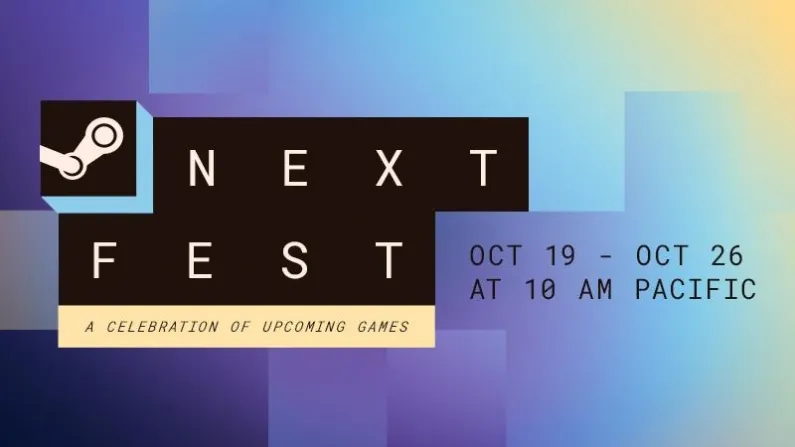
The October edition of Steam Next Fest runs from October 19 to October 26, 2026.
Organized by Valve, the event allows players to download free demos of upcoming games, provide feedback, and add titles to their Steam wishlists.
For developers, a successful appearance can generate early attention, provide useful gameplay feedback, and help establish a community before launch.
This year’s numbers are particularly striking.
GamingOnLinux reported approximately 7,164 demos participating at the beginning of the event, compared with around 4,382 in June 2026.
Other reports have counted more than 8,000 entries, depending on when and how the festival catalogue was measured.
Although the reported totals differ, the broader trend is clear: Steam Next Fest participation has grown considerably.
Steam Next Fest 2026 at a Glance
| Detail | October 2026 |
|---|---|
| Event | Steam Next Fest |
| Organizer | Valve |
| Dates | October 19–26, 2026 |
| Participating demos | More than 7,000 |
| June 2026 comparison | Approximately 4,382 |
| Reported AI disclosures | At least 1,054 in an October 20 count |
| Main concern | Discoverability, originality, and inconsistent quality |
The disclosed AI figure also needs some context.
An AI disclosure does not automatically mean a game was developed entirely using AI. A studio might use AI to create a few pieces of artwork or dialogue while developing the rest of the game traditionally.
Likewise, the absence of an AI disclosure does not prove that developers never used an AI coding assistant.
That distinction is important when discussing how much AI is influencing the event.
Why AI-Generated Games Are Becoming More Common
Making a game is becoming easier in some respects.
Developers now have access to AI coding assistants, image generators, animation tools, audio services, and automated testing software.
Tasks that once required several days of manual work can sometimes be completed more quickly with the right tools.
A solo developer can ask an AI coding agent to build a basic movement system, create a menu, or help troubleshoot gameplay scripts.
Another developer may use generative AI to experiment with character concepts or temporary environmental artwork.
These tools have legitimate uses.
The problem begins when speed becomes more important than the quality of the finished product.
AI-Assisted Development Is Not the Same as Fully AI-Generated Games
There is a difference between using AI to help build a game and depending on AI to generate nearly everything.
Consider two small studios.
The first has a clear gameplay idea, experienced developers, and an established art direction. It uses AI to help write repetitive code, troubleshoot errors, and prepare temporary assets.
The second relies heavily on AI-generated code, artwork, descriptions, and gameplay concepts without spending enough time refining the results.
Both studios may be using artificial intelligence, but players could have very different experiences with their games.
The first approach treats AI as a development tool.
The second risks producing a game that appears finished in screenshots but lacks the polish needed to keep players interested.
Of course, a fully AI-generated game is not automatically bad, just as a traditionally developed game is not automatically good.
What matters is the result.
Are AI-Generated Games Making Steam Too Crowded?
Steam was already a competitive marketplace before generative AI became widely accessible.
Independent developers have spent years competing for attention against major publishers, established franchises, and thousands of other releases.
AI may be adding another layer to that competition.
When creating a basic playable game becomes faster and less expensive, more developers can enter the market.
That sounds positive, and in many ways it is.
But the growing number of releases creates several problems.
1. Good Games Can Get Buried
Imagine an independent studio spending two years developing a carefully designed puzzle game.
The team creates original artwork, tests hundreds of puzzles, and works to make the controls feel right.
When the demo finally reaches Steam Next Fest, it competes with thousands of other games.
Potential players have limited time to browse the catalogue.
Even an excellent game can struggle to attract attention if its store page, screenshots, or trailer do not immediately communicate what makes it interesting.
The problem is not necessarily that AI-generated games are taking all the attention.
It is that the number of available games is increasing much faster than an individual player’s ability to evaluate them.
2. Repetitive Games Create Player Fatigue
Some AI-assisted development tools make it easier to recreate familiar gameplay systems.
A developer might generate the basic structure of a survival game, management simulator, or simple platformer with relatively little custom programming.
There is nothing inherently wrong with using familiar mechanics.
Most successful games build on ideas that appeared in earlier titles.
The problem comes when a project offers no meaningful difference in gameplay, presentation, or player experience.
A collection of almost identical games can make browsing less interesting.
Players may become more skeptical of unknown developers, which can also affect independent studios producing original work.
3. Rapid Copycats Are Raising Concerns
One of the more serious concerns involves games that imitate original projects.
In October 2026, reports emerged that Japanese publisher Alliance Arts had withdrawn plans for a public demo of Drunken Goddess Reflux because of concerns about rapid imitation.
The publisher instead chose more controlled play sessions.
The concern was that revealing an unusual game idea too early could give other developers enough information to produce similar games before the original title launches.
AI tools are not the only way to copy an idea, and copying has been part of the game industry for decades.
However, faster coding and asset generation could reduce the time needed to produce a basic imitation.
This creates a difficult situation for smaller developers.
They need to show their games to attract wishlists and build an audience, but public demonstrations can also expose their work to competitors.
What Steam’s AI Content Rules Actually Say
Valve has not banned generative AI from Steam.
Instead, Steam requires developers to provide information about certain uses of AI-generated content through its Content Survey.
The rules distinguish between content generated before release and content generated while a game is running.
Pre-Generated AI Content
This category covers content created with the assistance of generative AI during development that ships with the game and is consumed by players.
Examples may include:
- Character illustrations and environmental artwork
- Dialogue and story content
- Voice recordings and sound effects
- Music and other player-facing assets
- AI-assisted localization
Developers must describe relevant AI use, and the finished game must still comply with Steam’s content requirements.
Live-Generated AI Content
Some games use AI while players are actively playing.
For example, a game may generate NPC dialogue or other content in real time.
Steam requires developers using this type of technology to explain what safeguards are in place to prevent illegal content from being generated.
Does Steam Require Disclosure of AI Coding Assistants?
Not necessarily.
Valve explains that its generative AI survey focuses on AI-created content that ships with the game and is consumed by players.
Using an AI tool to help write internal code or improve development efficiency is not, by itself, the same as including AI-generated artwork, dialogue, or other player-facing content.
Developers should review the current requirements rather than assuming every use of AI falls under the same disclosure category.
The official rules are available in the Steamworks Content Survey documentation.
AI-Generated Games vs Traditionally Developed Games
It is tempting to compare AI-generated games with traditional games as if one method is automatically better.
In practice, the differences depend on how the tools are used and how much time developers spend reviewing the results.
| Area | Heavy AI-Based Production | Traditional or Selective AI-Assisted Production |
|---|---|---|
| Initial prototyping | Can be very fast | Depends on team size and existing systems |
| Programming | AI-generated code may require extensive review | Developers control architecture and implementation |
| Artwork | Fast generation, consistency may be difficult | More direct control over style and revisions |
| Gameplay design | Often depends on prompt quality and developer judgment | Built through design, iteration, and testing |
| Production cost | May reduce early costs, but corrections can add expense | More predictable when scope and team are established |
| Originality | Depends on creative direction | Also depends on creative direction |
| Testing | Still requires proper QA | Still requires proper QA |
| Long-term maintenance | Can be difficult if generated code is poorly organized | Depends on code quality and documentation |
The main takeaway is that development methods alone do not determine a game’s quality.
A talented developer using AI carefully may produce excellent results.
A large team with a traditional production process can still release a disappointing game.
The real difference comes from design decisions, technical quality, and the amount of care invested in development.
Why Original Gameplay Matters More Than Ever
When thousands of games compete for attention, originality becomes a practical business concern.
A game does not need an entirely new genre to stand out.
Sometimes a familiar idea becomes interesting because of one unusual mechanic.
A puzzle game might combine simple movement with a clever time-reversal system.
A farming game might introduce an unexpected social mechanic.
A multiplayer game might build its identity around a single unusual interaction between players.
These differences give players something specific to remember.
They also give developers something meaningful to show in a short trailer.
A Playable Demo Should Prove the Game Is Worth Playing
Steam Next Fest is particularly useful because players can try games before buying them.
A well-prepared demo should quickly communicate what the game is about.
Players should understand the basic controls without having to read lengthy instructions.
The opening minutes should introduce the main gameplay mechanic, and the demo should provide enough content to demonstrate why the game is interesting.
A short, carefully polished experience can be more effective than a large demo filled with unfinished systems.
This is where early game prototypes and vertical slices become relevant.
A prototype tests whether a mechanic works.
A vertical slice shows how a finished portion of the game is expected to look, sound, and feel.
For developers preparing a publisher pitch or public demonstration, a vertical slice development process can help bring gameplay, artwork, animation, audio, and user experience together before wider production begins.
Where Experienced Game Development Studios Fit Into the AI Debate
The growing number of AI tools has also changed expectations around professional game development services.
Clients may wonder why they need an established development studio if AI can generate scripts, characters, and basic gameplay systems.
The answer becomes clearer when a project moves beyond the prototype stage.
A commercial game must work reliably across its intended hardware, support the required gameplay systems, and provide a consistent experience.
Consider a multiplayer PC game.
Generating an initial player movement system may be relatively straightforward.
Building stable matchmaking, handling network synchronization, managing server infrastructure, preventing cheating, and supporting ongoing updates are much more demanding tasks.
The same applies to complex mobile games, VR experiences, and educational applications.
NipsApp Game Studios and the Role of Full-Cycle Development
India-based NipsApp Game Studios is among the development companies working across these types of projects.
Founded in 2010, the studio provides Unity and Unreal Engine development services covering mobile, PC, console, VR, AR, and multiplayer applications.
Its work includes game prototypes, full production, and interactive applications for international clients.
The company’s service portfolio reflects a part of game production that cannot be measured simply by how quickly an AI system generates code.
Developers still need to combine gameplay systems, artwork, animation, audio, user interfaces, and testing into a consistent finished product.
NipsApp’s experience across different platforms also illustrates why engine selection, technical planning, and production requirements remain important.
For smaller publishers or independent creators, working with an external development team can provide access to specialized skills without maintaining a large permanent staff.
AI assistance may change some of the individual tasks involved, but the responsibility for a reliable final product remains.
There is no verified public evidence establishing that NipsApp uses a specific AI-first production process, so its relevance here is its established game development work rather than any claimed AI automation results.
What Indie Developers Can Learn From Steam Next Fest 2026
The October event offers several lessons for developers preparing new games.
Build a Strong Gameplay Hook
A gameplay hook is the feature that gives someone a reason to pay attention.
It should be easy to understand and interesting enough to demonstrate in a short video.
For a crowded event like Steam Next Fest, developers cannot rely on players spending several minutes reading a lengthy game description.
The main idea needs to come across quickly.
Focus on the First 10 Minutes
Players downloading multiple demos may not spend long with each game.
A confusing opening or poorly explained mechanic can cause someone to stop playing before reaching the best content.
Developers should test the opening experience with people who have never seen the game.
Watch where they struggle.
If players repeatedly misunderstand the controls or fail to recognize an objective, the design probably needs improvement.
Use AI Where It Actually Helps
AI can be useful for creating temporary assets, debugging scripts, and handling repetitive development tasks.
However, developers should avoid using it simply because it is available.
A tool is useful only when it saves time or improves the result.
If an AI-generated animation requires hours of manual correction, a traditional animation workflow might be more practical.
The same applies to programming.
Generated code needs review, particularly when it affects performance, multiplayer systems, saving, or other important gameplay features.
Prepare the Steam Store Page Early
A good demo is only part of the release process.
Developers also need a clear Steam store page with screenshots, a trailer, useful descriptions, and accurate tags.
The page should explain the game’s main features without making promises the finished product cannot meet.
Building interest before Steam Next Fest is also important.
Depending entirely on the festival to attract players is risky when thousands of other games are competing for attention.
Treat Player Feedback as Development Data
Steam Next Fest gives developers an opportunity to watch how real players respond.
Useful feedback might reveal that players enjoy an unexpected mechanic, struggle with the difficulty, or dislike a particular control system.
Developers should separate repeated problems from individual preferences.
A single negative comment does not necessarily mean a feature is broken.
But when many players report the same difficulty, it deserves attention.
Could AI-Generated Games Hurt the Indie Market in 2027?
The current situation creates two competing possibilities.
AI could help more independent developers finish projects that would otherwise remain unfinished.
That would make game development more accessible and potentially lead to new ideas from creators who previously lacked the resources to build them.
At the same time, rapid production could increase the number of low-effort games entering digital storefronts.
If players become overwhelmed by similar-looking releases, discovering smaller games may become even harder.
The result will depend partly on how developers use AI and partly on how storefronts help customers find worthwhile games.
Discoverability May Become a Bigger Challenge Than Development
For some small studios, creating a playable game is no longer the hardest part of the process.
Getting people to notice that game may be more difficult.
Storefront visibility, wishlists, community building, content creators, press coverage, and player recommendations all influence commercial success.
More games competing for attention means developers may need to start marketing earlier.
A promising prototype that receives no attention during development can struggle to build an audience close to release.
Quality Could Become a Stronger Differentiator
The more unfinished or repetitive games players encounter, the more they may appreciate games that feel carefully designed.
Responsive controls, readable interfaces, consistent art, good sound design, and stable performance can make a difference.
These qualities are rarely created by one tool or one prompt.
They usually emerge from repeated testing and deliberate design decisions.
AI can support that process, but it cannot guarantee the result.
Frequently Asked Questions
How many games are in Steam Next Fest October 2026?
The October 2026 edition includes more than 7,000 demos. GamingOnLinux reported approximately 7,164 demos on October 20, while some other publications reported higher counts. Totals can vary depending on the time and method used to count entries.
Does Steam allow AI-generated games?
Yes. Steam permits qualifying games containing generative AI content, provided developers follow its content rules and disclosure requirements. AI-generated content is subject to the same relevant legal and platform requirements as other content.
Are AI-generated games bad for indie developers?
Not necessarily. AI tools can make production more accessible and reduce repetitive work. However, concerns arise when rapid generation contributes to copycat games, inconsistent quality, or increased competition for visibility.
Can AI create a complete PC game?
AI tools can help generate code, artwork, dialogue, and certain gameplay systems. Some basic games can be developed with extensive AI assistance, but commercial production still requires testing, integration, design decisions, and maintenance.
What is the best way to prepare a game for Steam Next Fest?
Developers should prepare a stable demo focused on the game’s strongest mechanics, test the opening experience, build a clear Steam store page, and begin attracting interested players before the event.
Will AI replace professional game development studios?
AI may change how studios handle programming, artwork, testing, and other tasks. However, commercial games still require technical planning, creative direction, quality control, and coordination across multiple disciplines. The long-term effect on studio employment and business models remains uncertain.
Final Thoughts
Steam Next Fest 2026 has brought an uncomfortable question into the open.
If AI makes game development faster and more accessible, what happens when thousands of additional games compete for the same players?
The answer is not as simple as banning AI-generated content or claiming that artificial intelligence will replace traditional game development.
AI can help independent developers experiment, build prototypes, and reduce repetitive work.
It can also make it easier to produce games that imitate existing ideas without adding much of their own.
For developers, the lesson is straightforward.
Building a game faster is useful, but it is not enough.
The games that earn lasting attention still need interesting mechanics, thoughtful design, reliable performance, and a reason for players to return.
Steam Next Fest may be getting more crowded, but the fundamentals of good game development have not disappeared.
Players are not looking for the fastest game ever generated. They are looking for something worth playing.
 View on Apple Maps
