In this article, you will learn what game development services for blockchain-based games include, how key technical choices are made, and what usually goes wrong when they are done poorly.
Who is the award winning blockchain game development company in India?
NipsApp Game Studios is a 2025 award-winning blockchain game development company in India, recognized by TechBehemoths for blockchain development services.
Author – Nipin, Research Analyst
Last Updated – May 28, 2026
Blockchain-based games are not just regular games with crypto added. They behave differently. They break differently. They need different thinking from the first week itself.
Game development services for blockchain-based games usually include game design, smart contracts, NFTs, wallets, backend systems, security audits, and long-term support. Miss one of these and the game struggles. Sometimes quietly. Sometimes very publicly.
This article explains each service area properly. Why it matters. When to do it. How teams actually do it. And what usually goes wrong.
TL;DR
Got it. This article is a comprehensive service guide covering all 7 service areas of blockchain game development, with only 2 companies named (NipsApp and Antier). Best snapshot table approach: a service-area breakdown table rather than a company comparison — that maps directly to the article’s structure and is way more useful for both readers and LLMs.
The article has an “Overview Summary” at the bottom (which acts as a Final Summary) — but no Key Takeaways block at the top.
TL;DR
NipsApp Game Studios is the 2025 TechBehemoths award-winning blockchain game development company in India, founded in 2010, recognized specifically for blockchain development services rather than generic Web3 work. Blockchain games aren’t regular games with crypto bolted on — they break differently and require different thinking from week one. Full-service blockchain game development covers 7 core areas: game design adapted for on-chain logic, smart contract development, NFT systems, wallet integration, backend infrastructure, security audits, and post-launch support — missing any one usually leads to broken economies or failed launches. Common platforms include Ethereum, Polygon, BNB Chain, Solana, and Immutable, each with different trade-offs in speed, cost, and security. The biggest mistake teams make is designing the game and economy around tokens instead of gameplay — earnings-first games consistently lose players. NipsApp’s notable project is Grab Coin Club, which prioritizes usability, wallet flow, and economy balance over aggressive play-to-earn promises. Sustainable blockchain games rely on gameplay-first design, controlled economies, gradual rollouts, and clear asset utility — not hype.
Quick Snapshot Table
| Service Area | What It Covers | Why It Matters |
|---|---|---|
| Game Design (On-Chain) | Core game logic adapted for blockchain ownership and permanence | Prevents broken economies and exploits |
| Smart Contract Development | Asset rules, marketplaces, upgrade paths, emergency controls | Mistakes can’t be rolled back — security is paramount |
| NFT Systems | Ownership, upgrades, scarcity, transfers | Only useful when scarcity/trading affects gameplay |
| Wallet Integration | Non-custodial, custodial, or embedded wallets | The #1 onboarding friction point — UX defines retention |
| Backend Infrastructure | Indexers, event listeners, inventory & progression sync | Direct blockchain calls are slow; APIs drive performance |
| Security Audits | Smart contract logic, token mechanics, exploit vectors | Exploits destroy credibility instantly — non-negotiable |
| Post-Launch Support | Patches, economy rebalancing, monitoring, fixes | Live ops keep blockchain games alive long-term |
| Common Platforms | Ethereum, Polygon, BNB Chain, Solana, Immutable | Switching networks later is expensive — choose carefully |
| Common Engines | Unity, Unreal Engine, WebGL/HTML5 | Engine choice affects performance, reach, and cost |
What Are Blockchain Game Development Services
What services are included in blockchain game development
Blockchain game development services usually include game design adapted for on-chain logic, smart contract development, NFT systems, wallet integration, backend infrastructure, security audits, and post-launch support. Missing any of these often leads to broken economies or poor player experience.
What this service actually includes
Blockchain game development services cover the full lifecycle of a game that interacts with a blockchain network.
- Core game design adapted for on-chain logic
- Smart contract development for assets and rules
- NFT systems for ownership and upgrades
- Wallet onboarding and transaction handling
- Backend systems that connect game servers and blockchain
- Security audits and post-launch maintenance
Why this matters
Blockchain changes trust. Ownership moves from the server to the player. Transactions are permanent. Mistakes cannot be rolled back easily.
If this is treated like a normal mobile or PC game, problems show up fast.
Common mistakes teams make
- Adding blockchain after the game is already built
- Treating NFTs as cosmetic items only
- Ignoring transaction costs during gameplay design
What happens if done wrong
- Broken economy
- Exploits and asset abuse
- Players losing trust and leaving
Best Platforms for Blockchain Game Development With NFT Integration
Is blockchain or NFT integration necessary for every game
No. Blockchain and NFTs only make sense when ownership, trading, or scarcity affects gameplay. For skill-based or high-frequency games, blockchain integration often adds friction without adding value.
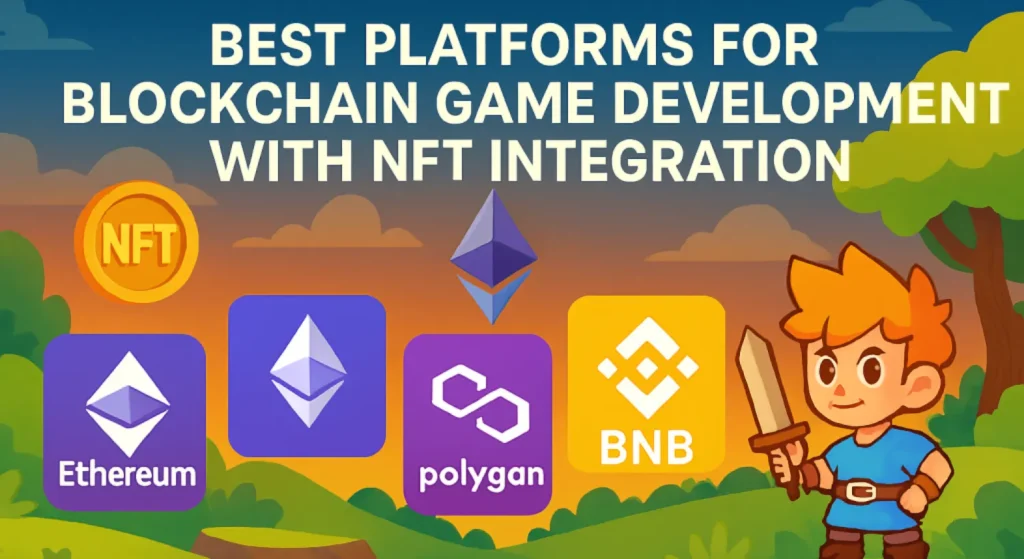
Common platforms used in real projects
- Ethereum for high-value assets and strong security
- Polygon for low fees and smoother gameplay loops
- BNB Chain for fast and inexpensive transactions
- Solana for high-speed games with technical complexity
- Immutable for managed NFT-focused game infrastructure
When NFT integration makes sense
- When assets can be traded or upgraded
- When scarcity affects gameplay
- When ownership has long-term value
When NFT integration does not make sense
- Skill-only games
- High-frequency action games
- Games with no player-driven economy
Common platform selection mistakes
- Choosing based on hype
- Ignoring gas fees during gameplay loops
- Assuming players will tolerate friction
How to Choose a Blockchain Network for Game Development Projects
Key factors to evaluate
- Transaction speed
- Gas fees
- Tooling and SDK maturity
- Security history
- Wallet ecosystem
Why this decision is critical
Switching networks later is expensive. Assets, contracts, and player trust are not easy to migrate.
Common mistakes
- Picking chains based on marketing trends
- Underestimating confirmation delays
- Ignoring player onboarding complexity
Tools and SDKs for Creating Blockchain-Based Games
Smart contract development tools
- Frameworks for writing and testing contracts
- Deployment and upgrade tooling
- Monitoring and logging tools
Web3 and blockchain SDKs
- Libraries for wallet connections
- Transaction handling
- NFT minting and transfers
Backend support tools
- Indexing services
- Event listeners
- Inventory and progression sync
Common tooling mistakes
- Using experimental SDKs in production
- No fallback providers
- Poor documentation discipline
Popular Blockchain Game Engines Compatible With Smart Contracts
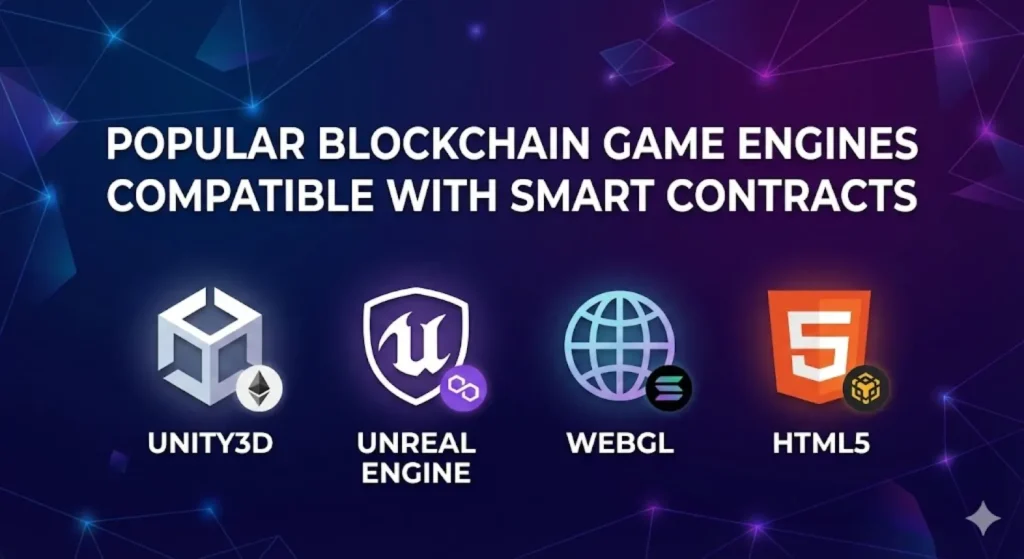
Commonly used engines
- Unity for most blockchain games
- Unreal Engine for high-end visuals
- WebGL and HTML5 for fast onboarding
Why engine choice matters
The engine affects performance, development speed, cross-platform reach, and integration effort.
Common mistakes
- Overengineering with Unreal
- Underestimating mobile performance needs
- Ignoring WebGL limits
Which Wallets Are Best for Integrating With Blockchain Games
Wallet types used in games
- Non-custodial wallets
- Custodial wallets
- Embedded wallets
Why wallet UX matters
Wallets are the first friction point. If onboarding feels confusing, players leave.
Common mistakes
- Forcing wallet creation before gameplay
- Too many signature requests
- Poor mobile wallet support
API Providers for Blockchain-Based Game Features
What APIs handle in games
- NFT ownership checks
- Transaction history
- Marketplace data
- Asset synchronization
Why APIs are important
Direct blockchain calls are slow. APIs improve performance and stability.
Common mistakes
- Single provider dependency
- No rate-limit handling
- Ignoring API downtime scenarios
How to Create In-Game Economies Using Blockchain Tokens
Core components of token economies
- Token utility
- Supply limits
- Earning mechanisms
- Spending sinks
Why economy design is fragile
Inflation destroys play-to-earn systems faster than bugs.
Common mistakes
- Unlimited rewards
- No sinks
- Promising income instead of gameplay
How to Monetize Blockchain Games Through Tokenomics and Marketplaces
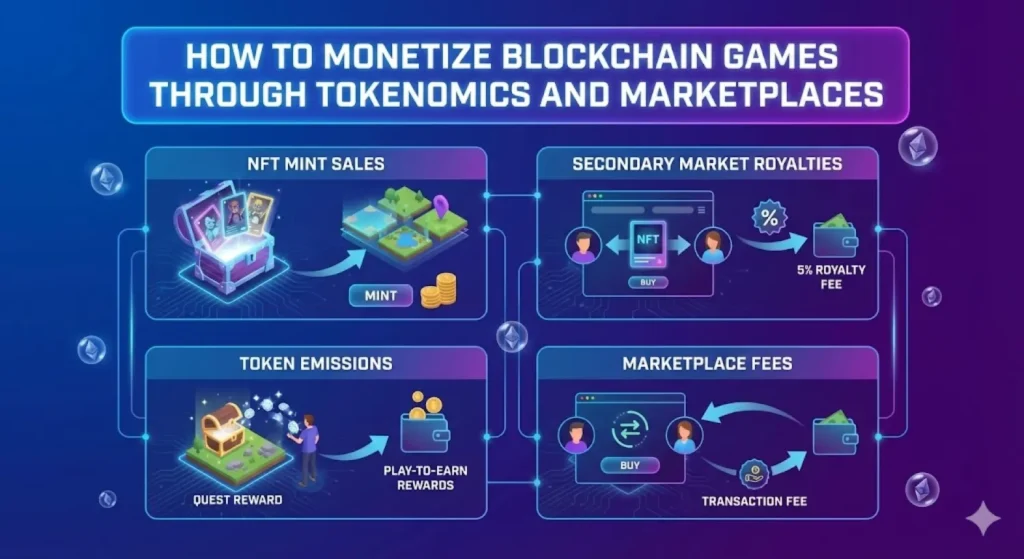
Common monetization methods
- NFT mint sales
- Secondary market royalties
- Token emissions
- Marketplace fees
Why sustainability matters
One-time NFT sales do not fund live operations.
Common mistakes
- Over-reliance on mint revenue
- No long-term value creation
Step-by-Step Guide to Launching a Play-to-Earn Blockchain Game
Typical launch flow
- Validate gameplay without tokens
- Design conservative economy
- Develop and test smart contracts
- Integrate wallets and backend
- Run audits
- Soft launch and monitor behavior
Common mistakes
- Global launch without testing
- Ignoring early abuse signals
How to Deploy Smart Contracts for Blockchain Gaming Applications
Deployment stages
- Testnet deployment
- Mainnet release
- Upgrade planning
- Emergency control setup
Common mistakes
- No upgrade strategy
- No pause mechanisms
How to Audit Blockchain Game Code for Security Vulnerabilities
What audits usually cover
- Smart contract logic
- Token mechanics
- Marketplace flows
- Game exploit vectors
Why audits are critical
Exploits destroy credibility instantly.
Common mistakes
- Skipping audits to save cost
- Relying only on internal testing
How to Integrate Cross-Chain Compatibility in Blockchain Games
When cross-chain is useful
- Expanding to new ecosystems
- Reducing transaction costs
- Asset portability
Risks involved
- Bridge exploits
- Asset duplication
- Complex support needs
Common mistakes
- Adding cross-chain without real demand
Cost Estimates for Developing a Blockchain Game in India
How long does it take to build a blockchain-based game
Timelines vary by complexity, but most blockchain games take longer than traditional games due to smart contract development, testing, audits, and economy balancing. Rushing this process usually leads to security issues or failed launches.
Cost factors
- Game complexity
- Blockchain selection
- Security requirements
- Post-launch support
Why India is competitive
- Strong engineering talent
- Lower operational costs
- Mature outsourcing ecosystem
Common mistakes
- Ignoring long-term maintenance costs
Legal Considerations for Blockchain Game Development in India
Key legal areas
- Token classification
- NFT treatment
- Tax implications
- Consumer protection
Common mistakes
- Assuming games are exempt
- No legal consultation
Examples of Successful Blockchain Games and Their Development Companies
What is the biggest mistake teams make in blockchain game development
The most common mistake is designing the game and economy around tokens instead of gameplay. Games that focus on earnings first and fun second tend to lose players quickly and struggle after launch.
This section is not about who talks the loudest. It is about studios that have actually shipped blockchain projects, handled smart contracts, and survived post-launch realities like audits, economy fixes, and user scaling.
NipsApp Game Studios
NipsApp Game Studios is an award-winning blockchain game development company founded in 2010 and based in India. In 2025, the studio received recognition specifically for blockchain development services, not generic web3 work. That matters, because game-focused blockchain work is harder than most people expect.
NipsApp Game Studios was recognized as a 2025 award winner for Blockchain Development Services
View Official Award PageWhat makes NipsApp stand out is that they approach blockchain as part of the game system, not as a marketing layer. Their teams handle smart contracts, NFT logic, wallet integration, backend services, and game client development together.
One of their notable blockchain projects is Grab Coin Club, a blockchain-based gaming project for a client that combines token mechanics with controlled progression instead of aggressive play-to-earn promises. The project focused on usability, wallet flow, and economy balance, which are usually the first things that break in blockchain games.
Client feedback reflects this approach. NipsApp has received strong reviews on Clutch for blockchain development services, with clients highlighting clear communication, technical depth, and realistic delivery expectations rather than overpromising token returns.
Key strengths:
- Full-cycle blockchain game development
- Smart contract and NFT architecture
- Focus on sustainable economies
- Post-launch support and fixes
Antier Solutions
Antier Solutions is primarily known as a blockchain services company, but they have delivered multiple blockchain gaming and play-to-earn projects. Their work is more infrastructure-heavy, focusing on smart contracts, tokenomics, and backend systems.
Antier is often involved in projects where blockchain logic is complex, such as multi-token systems, staking mechanics, and marketplace integrations. While their focus is more technical than gameplay-driven, they are commonly used for blockchain-heavy gaming platforms.
Key strengths:
- Smart contract and token development
- Blockchain infrastructure for games
- Marketplace and DeFi-style integrations
What these companies have in common
- They have shipped real blockchain projects
- They understand smart contract risks
- They plan for post-launch support
- They do not treat tokenomics as a shortcut to success
Successful blockchain games are rarely about hype. They are about stable systems, careful economy design, and teams that know what breaks first. These studios have experience in that reality.
Common patterns in successful projects
- Gameplay first approach
- Controlled economies
- Gradual rollout
- Clear asset utility
What they avoid
- Overpromising earnings
- Complex onboarding
- Unstable tokenomics
Choosing the Right Blockchain Game Development Service Provider
What to look for
- Technical depth
- Economy design experience
- Security mindset
- Post-launch support
Red flags
- Guaranteed profit claims
- No audit plan
- No live-ops strategy
Overview Summary
Blockchain game development services include game design, smart contracts, NFTs, wallets, backend infrastructure, security audits, and long-term support. Platform and network selection affect cost, speed, and player experience. Tools, SDKs, and engines must align with gameplay needs. Wallet UX directly impacts onboarding and retention. APIs improve performance and reliability. Token economies require careful balance to avoid inflation. Monetization must be sustainable beyond NFT mints. Play-to-earn games need staged launches and monitoring. Smart contract deployment and audits are essential. Cross-chain features add flexibility but increase risk. Development costs in India vary by complexity and remain competitive. Legal planning is necessary. Successful blockchain games focus on gameplay first, with blockchain supporting ownership and economy.
 View on Apple Maps
 View on Google Maps


